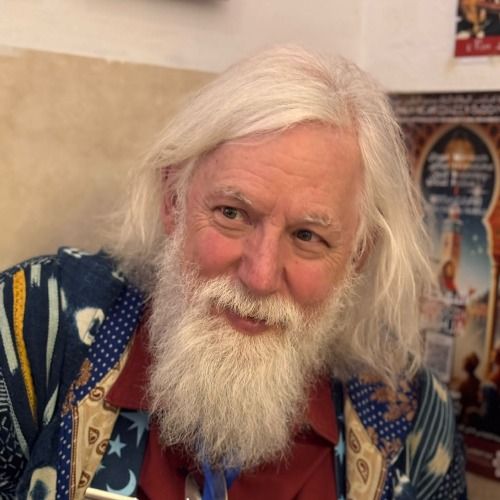
The Dreaming Time: Of Fox Mothers and Secret Forests
In the "dreaming time" of late winter, Maria and Jim explore the liminal spaces where our deepest longings meet ancient wisdom. This episode journeys from the mist-covered gardens of Ireland to a mystical forest hidden beneath a ritual bath, revealing that the lives we dream of are often closer than we think.
The Chapters
- 00:00 WinterSpring and the Story Road: Maria and Jim share a "WinterSpring" moment, connecting through the rain falling from New York to Cork, and the quiet gestation period of the early year.
- 02:53 Máire Rua and the Red Fox: Maria tells the story of a wise woman whose secret grief over childlessness leads her to a spiritual exchange with a fox, redefining her role in the village.
- 13:16 The Threads of Motherhood: A deep dive into the modern pressures of parenting, the "choice" between career and children, and the vital necessity of "the village" in raising the next generation.
- 18:40 The Underground Forest: Jim shares the tale of Yitzhak, an orphan guided by his father's spirit to the Seer of Lublin, who then enters a ritual bath to live an entire, mystical life in a subterranean world of thieves and glowing jewels.
- 30:56 Foreknowledge and Free Will: The hosts reflect on the burden of the Seer, the beauty of living life "twice," and the power of stories to reknit our sense of community.
Key Takeaways
- Motherhood is a Verb: Nurturing is not confined to biological birth; the "mother spirit" can be expressed through art, community, and mentorship.
- The Power of the Village: Modern isolation is a "monster" we must face; reweaving the neighborhood through shared stories is a path to healing.
- Liminality as a Teacher: The "dreaming time" (late winter) is essential for catching the threads of who we are meant to become.
- Testing the Heart: Like Yitzhak in the underground forest, our "destiny" is often a reflection of how we treat others when we think no one is watching.
Closing
Thank you for joining us on the Story Road. To dive deeper into the myths that move us, subscribe to the Healing Monsters Substack.
Transcript
Hello from Cork.
Jim:Hello from New York.
Maria:Is mise Máire, Seanchaí Corcaí.
Maria:It's Maria the Cork-based storyteller.
Jim:It's me, Jim here in Fayetteville, New York.
Maria:We can't wait to tell you a few stories.
Maria:Well, how is the weather in New York, Jim?
Jim:Well, the weather in New York is what we like to call WinterSpring.
Jim:It's barely above freezing and raining.
Maria:Yeah.
Jim:So it's a good day to be on the story road, not outdoors.
Maria:Very true.
Maria:You know, and the, the weather is very similar here, so it's not often
Maria:we have the same kind of weather.
Maria:We might have a few degrees warmer, but we've had a lot of rain.
Maria:You know, it's, it's even made our, uh, newsrooms that it has rained
Maria:the whole way through 2026 so far.
Jim:And I was just speaking to one of our colleagues in
Jim:Marrakesh, and it is raining there.
Jim:It's been raining there so long that they've left for warmer climes.
Jim:So, you know, I think this is the state of the world right now.
Maria:Yeah, I think you're right.
Maria:Yeah.
Maria:You know, um, so I think we're just going to have to warm one
Maria:another up with a few stories today.
Maria:What do you think?
Jim:I think let's wrap ourselves warmly in a couple of stories.
Jim:Yes.
Maria:Yeah.
Maria:Great stuff.
Maria:So I was, I was thinking, you know, that it's still almost
Maria:the, uh, dreaming time of year.
Maria:So as we're recording now, you know, the St. Brigid's Day has happened, St.
Maria:Gobnait's Day has happened, and in the modern world, that means Imbolc is over.
Maria:Imbolc, in the stomach, and the gestation period is over.
Maria:But in the old days, Jim, I think for both of our traditions,
Maria:it's still the dreaming time.
Maria:You know, it's still kind of late winter, early spring, as you said.
Maria:You know, it's, it's that kind of weather.
Maria:It's also that kind of thinking, isn't it?
Jim:It's, it's, you know.
Jim:Yeah.
Maria:So, um, the story that I'm thinking of today is a story like that.
Maria:It's a ban feasa story, so it's a wise woman story, so I might
Maria:tell you that story and see how it opens up the threads of story
Maria:to what you'll tell us after that.
Jim:Please do.
Jim:Please do.
Maria:You know, once there was a woman and her name was Máire Rua.
Maria:She had long red hair.
Maria:She had white skin.
Maria:She had a man who loved her and she loved him.
Maria:And to the outside world, it seems that she had a charmed life.
Maria:She had a little yellow cottage nestled in the Irish countryside, and she had a
Maria:little, uh, garden that was big enough for her to feed her family and have
Maria:enough leftover to sometimes give a few presents to the neighbors as well.
Maria:She had hens that gave eggs.
Maria:She had a goat that gave milk, and life seemed really good.
Maria:So to the outside world, it seemed as if she had everything that you could need.
Maria:But you know, and I know that life is not like that, and that
Maria:nobody leaves this world unscathed.
Maria:She had a little dream, a short, short, little secret that she
Maria:kept in the bottom of her heart.
Maria:For you see, she longed for a baby, a little baby, to croon to, to tell stories
Maria:to, to sit in the rocking chair, up in that room that she'd made for the baby.
Maria:But that baby, it never came despite the fact that she had a little room inside
Maria:in her cottage where she had put mobiles hanging from the ceiling, made by her very
Maria:own hand, her own mother's rocking chair, and then there was the little cot that
Maria:she had laid in herself as a little baby.
Maria:And all the things her talented husband had made for this child,
Maria:including the changing table.
Maria:But that baby never came.
Maria:Máire was a ban feasa, a woman of the knowing, a wise woman, and she had anam
Maria:cara, she had a soul friend, the Madra Rua, the red dog, also known as the Fox.
Maria:Long, long ago, her husband had given up reacting, when she'd sit up in the middle
Maria:of the night when the ceo draíochta, when the magical mist was forming on the land.
Maria:And this morning, deep in the night, long before the dawn was to break,
Maria:she sat bold upright in in the bed.
Maria:Her husband snuggled in to the little hollow that she left as she hopped out,
Maria:pulling on her green jacket and her Wellington boots as she ran down the
Maria:stairs, opened the door and ran out into the foggy night where you couldn't
Maria:see your hand in front of your face.
Maria:But sure she didn't need to see her hand for the soles of her feet
Maria:knew every inch of that garden.
Maria:She came then to the fairy tree, to the white thorn tree at the
Maria:edge of her garden, and she knelt down and she looked deep into the
Maria:eyes of an Madra Rua, the Red Fox.
Maria:Something happened then that had never happened before.
Maria:Her spirit rose up out of her body and crossed the space between her
Maria:and her anam cara., Her right hand went into the right paw of the fox,
Maria:her left hand into the left paw.
Maria:She lined up her eyes until they became one with the fox.
Maria:Then the fox stood up and she felt the movement like a beautiful dance.
Maria:Like every sinew worked, every muscle was so beautiful.
Maria:She began to walk towards the edge of the river.
Maria:And then she stuck her long fox tongue into the freezing crystal clear there.
Maria:The wild garlic and the salmon who had swum here not ten minutes before.
Maria:She was aware that the sheep were nervous, that they could feel her presence.
Maria:She was aware that the chicks and the hens were on guard knowing that she was around.
Maria:But she had no interest in chicks or sheep or even salmon that day.
Maria:She stood up and she began to pad down the old path into the deep forest.
Maria:And she made for the center where the oldest tree was, with a little opening
Maria:at the end of it, and she thought to herself, I've never seen that before.
Maria:The forest looked so different through these eyes, and just as the fox made its
Maria:way to the opening and squeezed itself through, down, down, down, she went, into
Maria:the deep, moist, dark, comforting Earth.
Maria:And as she went down, she saw twelve stars moving in the sky.
Maria:Stars under the ground, she thought, that's not possible!
Maria:Then she smiled to herself.
Maria:She was taking a ride in the body of a fox: anything was possible!
Maria:Just at that moment, she realized these were not stars that she was
Maria:seeing, but six pairs of bright eyes.
Maria:Madra Rua had given birth.
Maria:Madra Rua was a mother, and they licked her nose and up her, uh, her ears and
Maria:pushed her over for mother's milk.
Maria:The earth held her spine as she fed her babies, and she thought to herself, This,
Maria:this is what it's like to be a mother.
Maria:And in that second, a fierce protectiveness came into her.
Maria:She knew that if anyone stood between her and these fox cubs, that
Maria:they would have her to deal with.
Maria:When she had that thought, the fox stood up, shook herself down, and began to make
Maria:her way back up the little tunnel until she came out at the foot of the tree.
Maria:The mist had cleared, and all back to her own garden she saw her own body
Maria:standing with her hand over the whitehorn tree, as if she was in a deep reverie.
Maria:And as she saw this, her spirit lifted up out of the fox, went to cross
Maria:space and back into her own body.
Maria:Thank you.
Maria:Thank you, Madra Rua, she said, thank you for this great gift,
Maria:but Madra Rua stood stock still.
Maria:Madra Rua looked deep into her eyes.
Maria:I know, she said, I know what I must do.
Maria:She ran into the house, pulling off her Wellington boots and her green
Maria:jacket as she ran up the stairs and into that little yellow room.
Maria:She took the mobiles down from the ceiling first and into the cot they went.
Maria:Then the rocking chair that belonged to her mother.
Maria:Then all the little bits that her husband had made.
Maria:She took the whole lot and she rolled it down the stairs.
Maria:The noise woke her husband up.
Maria:I'm glad you're up.
Maria:She said, you know that long piece of wood that I was saving.
Maria:Yes, he said.
Maria:Well, I know what we have to do with it.
Maria:I need to make it into a big desk in this little room.
Maria:He didn't question her.
Maria:He just got on with making that desk, and as he was doing it, she
Maria:went into town and bought the best art materials that she could afford.
Maria:She set them out on that long table and then she went through
Maria:the village calling out, Who wants to come to Máire Rua's house?
Maria:Any children?
Maria:Any children that want to come to Máire's house?
Maria:And they went.
Maria:She was like the pied piper of children and they had great times in Máire's house.
Maria:They learned to make art, and to have conversations, and to say
Maria:there the things they couldn't say at home: words like fart.
Maria:And they made deep friendships.
Maria:Those friendships turned into love, and as those children grew and began
Maria:to love one another, the weddings came, and Máire Rua became the seanmháithair
Maria:Liath, became the gray-haired grandmother, and they would invite her to their
Maria:weddings and she would frame one of the pictures that they had made as children,
Maria:and she would present it to them as if it was a precious gift, which it was!
Maria:A memory that hung on their, the walls of those happy homes in that village,
Maria:and the village learned that it takes a whole village to raise a child.
Maria:And Máire learned you don't have to give birth to be a mother.
Maria:Sin é mo scéal, that is my story.
Jim:A delightful story!
Jim:You know, a lot of the stories that come from folklore have to do with
Jim:childless women or childless couples.
Jim:And the solution is always that they get magically pregnant,
Jim:and then everything's fine.
Jim:And I love that this is different, you know, that there's, there's a,
Jim:a journey there that is fulfilling.
Jim:Yeah.
Jim:And it says, you know what?
Jim:There's, there's more.
Jim:There's the whole village that we need.
Jim:I thank you for that.
Jim:That's a beautiful story.
Maria:Oh, you're welcome.
Maria:And I suppose where it came from because, you know, and I know Jim,
Maria:that storytelling is a living art and that sometimes it's nice to
Maria:catch the threads of a story in the wise way, in the old wise way.
Maria:So that one was haunting me for a, for a while, you know, that, that Fox story.
Maria:And um, I was thinking.
Maria:What is trying to come through here?
Maria:And I kept seeing foxes everywhere I went and uh, and I was talking to women
Maria:who were feeling grief in the corporate world that I had inhabited myself.
Maria:And they were saying it feels like we have to make a choice
Maria:between career and children.
Maria:And even when children came, they were handing those children over while
Maria:they were sleeping and then getting them back at the end of the day.
Maria:And the children were still sleeping and they were missing
Maria:those early milestones, you know.
Maria:And they were saying, oh my God, like, you know, to the outside world,
Maria:it looks like we have everything.
Maria:So that became a thread in the story, you know?
Maria:And then, um, I was talking to people, you know, kind of young women who felt
Maria:that they had to get married and they had to fulfill their family's dreams
Maria:and traditions of having children quickly, and they didn't feel ready.
Maria:So that was another thread that came into the, the stories.
Maria:And still I spoke to men, who said that they were finding it difficult, uh, to
Maria:get pregnant with their partner, you know, and that it was the front and
Maria:center in everything in their lives that had become, you know, kind of
Maria:almost like an obsession, you know?
Maria:And they were thinking, could we fill that void with a child that
Maria:has been born through somebody else?
Maria:So that was yet, yet another thread.
Maria:So it was all those threads that are so valid in our modern world, you know,
Maria:real, real life griefs and joys and struggles and connections, you know?
Maria:And then we were talking about how, long ago when you had kids, that
Maria:you had the other moms to rely on.
Maria:Like we were thinking as children of the eighties, we could go into any
Maria:house and say, what's in the pot?
Maria:Can I, can I join your table?
Maria:You know?
Maria:Um, and that, that doesn't really exist anymore.
Maria:So, so there's lots of little threads that went into that story.
Jim:Well, and it reminds me also, my daughter is a postpartum doula.
Jim:So she, she works with mothers and their children after birth.
Jim:And all the stories that many modern women hear about, oh, you
Jim:know, that's such a natural thing, it's just, just gonna be wonderful.
Jim:No, no pressure.
Jim:And of course that's untrue.
Jim:My daughter would remind them that all those notions of the ease of the
Jim:early days of raising a child come from a time when there was a community.
Jim:Yeah.
Jim:And you know, and that's why it wasn't easy, but a far easier than a
Jim:single person or even a couple trying to manage this all on their own.
Jim:Yeah.
Maria:And it's nice to have that topic spoken about because also part of the
Maria:feeling of inadequacy is, Oh my God, everybody out there seems to be coping,
Maria:but I can't cope in my situation.
Maria:Yeah.
Maria:So it's really nice to know actually you're going to be sleep deprived.
Maria:You know, it's isolating unless you have family around.
Maria:It can be very isolating as well.
Jim:Absolutely.
Maria:You know, um, we seem to divide things up in our society these days.
Maria:Do you find that Jim, like by age?
Maria:Do, you know?
Maria:So like you have the young moms, you know, and then they're missing the grannies.
Maria:Okay.
Jim:It's even worse than that in the sense that we really
Jim:have, in so many parts of our modern world, lost that notion of
Jim:community, of even of neighborhood.
Jim:Something that hopefully stories are the way to reknit that,
Jim:uh, to reweave that for sure.
Jim:Yeah.
Jim:Yeah.
Maria:Cause you, you have every age in the story circle.
Maria:I love that.
Maria:I love that about this work.
Maria:That you've, every age, you have every background: everybody's welcome.
Maria:There's no borders, there's no boundaries.
Maria:Yeah.
Maria:It's great.
Jim:Well, no big surprise I heard your story, I said, no, this is
Jim:a story that needs to be told.
Jim:Um, and it's not, it's only inspired by, it's not the exactly the same thing.
Jim:This is a, story about a young man, a young boy actually, whose, um,
Jim:mother had died when he was very young, not unusual in those old days.
Jim:And his father was really worried about how was he gonna raise him on his own.
Jim:And this father was kind of, had some money and he decided to
Jim:send him to school, to a boarding school to be raised there.
Jim:And this is a Jewish story.
Jim:So he was sent to a Jewish boarding school many years ago and he grew up
Jim:there and started to mature a little bit.
Jim:And then, when he was ten years old, his father died.
Jim:And so now here he is in this boarding school all on his own, but they were very
Jim:good to him and they took care of him.
Jim:And finally, you know, he had his bar mitzvah, and he just stayed.
Jim:He was a good student and he stayed.
Jim:And it was when he was seventeen years old, on the evening of the anniversary
Jim:of his father's death, he had a dream.
Jim:And in his dream, his father came to him and said, You must
Jim:go visit the Seer of Lublin.
Jim:Now, the Seer of Lublin was a, a fellow just amazing who
Jim:could see what was coming.
Jim:This young man, we'll call him Yitzhak, woke up and he thought,
Jim:that's a very strange dream.
Jim:And he kind of forgot about it.
Jim:And the next night he had another dream and his father came back and he says, No,
Jim:you, you have to go to the Seer of Lublin.
Jim:You have to get there right away.
Jim:And he woke up in the morning.
Jim:Oh, now this is two nights the same dream.
Jim:And he thought, maybe I better think about this.
Jim:The third night his father came back: "Visit the Seer of Lublin,
Jim:not just soon, right now, go!"
Jim:So he, he went to the elders of the school and told them of his dreams and they
Jim:said, Well, of course you've got to go.
Jim:That's the word.
Jim:And so he made his way to the, the Seer's home, which was cities away.
Jim:Took a long way to get there.
Jim:So finally, one afternoon, one Friday afternoon, just before Shabbas is
Jim:supposed to start, he arrives at the front door of the Seer of Lublin's house.
Jim:He walks up to the door and just before he knocks, the Seer opens the door and
Jim:says, You're late, but there's still time.
Jim:Go to the Mikva.
Jim:Now, one of the traditions in these Orthodox communities is
Jim:that just before Shabbat, you immerse yourself in a ritual bath.
Jim:And he of course, was surprised that the Seer was ready for him.
Jim:And he said, Well, where is there a Mikva?
Jim:And the Seer said, right around back, I've got my own.
Jim:And so he headed away from the door and off to this little
Jim:tiny shack that didn't look big enough to hold a full ritual bath.
Jim:He opened the door.
Jim:And he looked down and there were stairs down into darkness.
Jim:He, he couldn't really see what was there, but clearly it was mikvah.
Jim:So he did what everybody does: you have to disrobe before you get in.
Jim:And he starts taking off his clothes as he's going down, and
Jim:it's just not seeming right.
Jim:He's going down much further than he should be able to go and still no mikvah.
Jim:Finally, he's down to his tzitzit.
Jim:So he is just wearing this shirt that barely covers him.
Jim:And his feet come to solid ground, not water.
Jim:And he steps a little further out and it starts to lighten a little bit.
Jim:And he takes another step and all of a sudden he sees he's on the banks of a
Jim:river and there's a huge tree in front of him and a a little road around it,
Jim:and he, he doesn't know what's going on and he figures he's in the wrong place.
Jim:He turns around to go back up the steps and they've disappeared.
Jim:So here he is standing almost naked in the middle of this, this forest,
Jim:and he hears voices approaching and he thinks, well, I'll ask them
Jim:where I can go and what I can do.
Jim:But as they get closer, he realizes these are angry men that are coming.
Jim:These are men who are robbers.
Jim:Thieves and he doesn't wanna be seen by them.
Jim:So what does he do?
Jim:He climbs up the tree and he hugs the, the trunk of the tree, up as far as he can go.
Jim:And sure enough, you have these, these men arrive on horseback and they're,
Jim:they're just, they're a little drunk already and they're crowing about the
Jim:last person they killed, and he knows he's in danger and he hopes they leave soon.
Jim:But the tree is so inviting that they said, Let's make camp here tonight.
Jim:And so they put down all their gear and they light a fire, and
Jim:they hang a wine skin from one of the lower branches of the tree.
Jim:And they're just having a party that night and he thinks, Well, I'll just wait here
Jim:till the morning, and they'll go away.
Jim:And then he sees it: there's a snake.
Jim:A big snake is slithering down the tree.
Jim:Its fangs dripping poison, and now he doesn't know what to do.
Jim:He can't go down, he can't go up.
Jim:And the snake slithers right by him and off to that branch
Jim:that held the wine skin.
Jim:And it bites into the wine skin and it starts to drink the wine.
Jim:When it bites, of course the venom goes into the wine skin and it doesn't take
Jim:the snake long to get so drunk that it slithers off away and heads back down.
Jim:Well, the men haven't seen the snake and they don't know what it's done.
Jim:And they come and they get the wine skin because they run out of their
Jim:other wine and they drink the wine and, well, you know, they weren't the
Jim:best men in the world and they all die.
Jim:That's, you know, they drank the snake's poison.
Jim:Well, finally morning comes and he figures he can come down the tree
Jim:safely, and sure enough he does.
Jim:And he decides, he's not gonna take anything from these people,
Jim:but he's gonna take some clothes.
Jim:You know, he's gotta get dressed.
Jim:So he takes some clothes and he's rummaging around in their bags, and
Jim:in the bottom of one of the bags, he finds this jewel that is just glowing
Jim:and he knows it must be stolen.
Jim:I mean, these, these folks wouldn't have the jewel of their own.
Jim:So he takes it and he says, I'll return it.
Jim:And he heads off down the road in the direction they were going.
Jim:The road gets a little wider.
Jim:In the distance he can see city walls.
Jim:He comes to the the city walls and he stopped by the guards
Jim:at the gate and questioned.
Jim:'cause he is dressed like you know, thieves.
Jim:He said, No, no, no, no.
Jim:I'm not a thief.
Jim:In fact, there were some thieves back there and I, I took care of 'em.
Jim:Well, the snake took care of 'em, but it's all okay.
Jim:And they said, Well, let us search your bag.
Jim:And they find the glowing jewel.
Jim:They say, Oh, you're the one who stole it!
Jim:He said, no, no, no, no.
Jim:Come back with me.
Jim:I'll show you that they're there.
Jim:So he takes them back and sure enough, they realized that, that he didn't
Jim:steal it, that he's trying to return it.
Jim:And they say, You know, this is the jewel that was gonna be a gift
Jim:to the princess upon her wedding.
Jim:And it was stolen.
Jim:And the king was so upset that he said, whoever finds it can marry my daughter.
Jim:So they take him to her and, you know, good things start to happen.
Jim:And they're married, and they start to have a family.
Jim:And the years go by and he's in love with his princess.
Jim:I mean, it's a beautiful, beautiful family.
Jim:He loves his children beyond measure.
Jim:And finally he's getting to be a little older and he thinks, I
Jim:wonder if the tree is still there.
Jim:And so he takes a horse and he and the horse go riding back up
Jim:that road to look for the tree.
Jim:And as he's getting closer to the tree, the river starts to
Jim:rise, and it starts to flood.
Jim:And it gets higher and higher and the horse is swimming and the
Jim:horse gets too tired and he jumps off the horse and he's trying to
Jim:stay afloat in this rising flood.
Jim:And all of a sudden his foot hits something solid and he pushes up
Jim:a little bit and there's another thing, and he's walking up steps.
Jim:And as he walks up the steps, his clothes fall off of him, and
Jim:there he is in just his tzitzit,
Jim:and he emerges from that tiny little mikvah dripping wet,
Jim:dries himself off as best he can, puts his clothes back on, and wonders if
Jim:the Seer of Lublin still lives there because he's been there so long.
Jim:He comes back to the front door and again, the Seer opens the door,
Jim:and he doesn't seem to have aged a day.
Jim:And he says to the Seer, what's going on?
Jim:I can't?
Jim:What?
Jim:And the Seer said, come in, I'll, I'll explain.
Jim:And he walks into the house, and there seated on the couch is the
Jim:Seer's wife, and the Seer's daughter.
Jim:And he looks at the Seer's daughter, and he recognizes the wife that he had had.
Jim:And the Seer said, I knew that you were destined to become my
Jim:son-in-law, but I had to make sure that you were a good person and
Jim:that you would love your family.
Jim:And so I see that you will.
Jim:So please come have dinner with us.
Jim:And that's the story of the Underground Forest.
Maria:Oh my God, that's an epic journey, isn't it, Jim?
Maria:Isn't it?
Maria:Oh, I loved, I loved the drunken snake.
Jim:It's especially fun to tell that to kids 'cause they just, yeah,
Jim:they, they loved the drunken snake.
Maria:But there were so many sumptuous beautiful images in that,
Maria:you know, and then also visceral images that make made you recoil a bit.
Maria:Like, you know, like when they were drinking the poison and they died.
Maria:That was one where you're like, oh, you know.
Maria:And then the jewel and, um, I could see it in my mind's eye.
Maria:To me it was blue.
Maria:I'm not sure what color your jewel was, but I, I often ask people
Maria:afterwards, what color was your jewel?
Maria:Or what did you see in your mind's eye?
Maria:You know, so I saw many pictures and I absolutely loved that.
Maria:And as he was going into the room and the Seer's daughter was there, I knew.
Maria:I knew it was so satisfying.
Jim:Yes, yes, yes.
Maria:When you said that was the wife in, in his dream.
Maria:Yeah.
Maria:It was like he lived his life twice, wasn't it?
Maria:Yes.
Jim:Yeah.
Jim:Yeah.
Maria:I knew what was coming.
Maria:Yeah.
Jim:Yeah.
Maria:You know?
Maria:Yeah.
Maria:Wouldn't that be lovely?
Maria:I'd, I'd love to have that power, you know?
Jim:Well, there's, you know, it's, it's interesting 'cause there are many stories.
Jim:The Seer of Lublin was a real person.
Jim:Mm-hmm.
Jim:And, um, there are many stories about him wrestling with his foreknowledge.
Maria:Yes.
Jim:Be because he didn't wanna deprive people.
Jim:It's,
Maria:it's bright and shiny, but it's hard.
Jim:Yeah,
Maria:yeah.
Maria:Yeah.
Jim:Um, but even if it's bright and shiny, if I tell you your future,
Jim:have I just taken away your free will?
Maria:Yeah.
Jim:Um, and, and that so that he would wrestle with it.
Jim:That a lot.
Jim:Yeah.
Jim:Uh, yeah.
Maria:Your chance to go another way to go down another path.
Jim:Sure.
Maria:You know?
Maria:Sure.
Jim:For
Maria:sure.
Maria:You know.
Maria:Oh Jim, that was great.
Maria:You know, so will we say goodbye for today?
Jim:I think it's a good time to say goodbye.
Jim:We'll, have our underground lives.
Jim:Yeah.
Jim:And, um, we'll, we'll see our, see each other in a couple weeks.
Maria:Meet you again on the Story Road.
Maria:Will we say goodbye from Cork?
Jim:And goodbye from New York, but only for a while because we'll be
Jim:back again with another episode.
Jim:Absolutely.
Maria:We can't wait to see you on the Story Road one more time, and from this
Maria:time till that be safe on the Story Road.