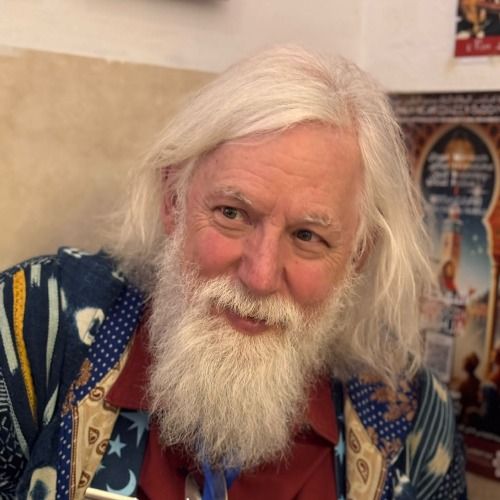
The Tree of Seasons & Greenwood Medicine
What happens when we step out of four-walled consultation rooms and let ancient woods, rushing rivers, and mythic memory do the heavy lifting of healing? In this rich, sunlit gathering across the Atlantic, Maria, Jim, and guest Shane Ibbs explore how bushcraft, folklore, and conflict-free tales re-tune human hearts to natural reciprocity, selfless giving, and the courage to say the unsayable.
Our Guest - Shane Ibbs (Therapist, Bushcraft Leader & Storyteller)
Born in Suffolk, England, Shane, the oldest of six children, grew up with oral stories around the hearth. In the early 90s, Shane began to use 'applied storytelling' and trained as a Social Worker. Visiting Canada in 1997, through a connection, Shane was invitated to attend a gathering of the indigenous Metis people. Part of the day was a healing story circle. Shane was so moved by this that he retrained as a Counseling Therapist and increased his use of 'applied storytelling'. In 2012, Shane trained at the International School of Storytelling, never dreaming, after sharing a personal story in Canada, that he would end up telling stories to audiences in the Netherlands, Morocco, Sri Lanka, Sweden, Ireland, and all around the UK.
Visit Shane on his socials!
- https://www.shaneibbsstoryteller.com
- Instagram: @ibbsshane
- LinkedIn: Shane Ibbs
The Stories in This Episode
- "The Tree of Four Seasons" – Told by Shane Ibbs (A Buddhist teaching tale on perspective, seasonal rhythm, and wholeness)
- "The Lemonade River and the Corn Dolly" – Told by Máire (A co-created ecological myth from the 2026 Festival at the Edge on reciprocity and returning water to the source)
- "The Story of Wali Dad" – Told by Jim (A Punjabi folktale on the boundless ripple effect of pure, non-transactional generosity)
- "The Silver Butterfly" – Referenced by Shane Ibbs (A Duncan Williamson traveller tale about reshaping currency into acceptable wonder)
- "The Curing Fox" – Told by Shane Ibbs (A Cree healing tale that allows listeners to speak the unspeakable and hold grief)
Episode Chapters
- [00:00] Welcome from Harbor Winds to Upstate Sun Maria and Jim welcome listeners from Cork Harbor and Fayetteville, New York, joined by UK storyteller Shane Ibbs to celebrate rare festival weather and the shared current between their lands.
- [02:11] Leaving the Clinic for the Canopy Shane recounts his mid-career transition from traditional social work and psychotherapy into the woods, discovering how green spaces and bushcraft break through to at-risk youth and weary adults in ways indoor rooms never could.
- [07:56] The Medicine of Green Spaces & Hospital Sanctuaries The trio explores clinical and spiritual evidence behind nature therapy - from prison and hospital studies to Jim’s chaplaincy work designing rooftop hospital gardens that serve as living chapels.
- [10:12] Parallel Paths: Old-Growth Woods & Indigenous Kinship Jim reflects on his own journey from family therapy into spiritual storytelling, walking the nearby old-growth forest daily, and learning deep relational stewardship alongside local indigenous elders.
- [13:35] Shane’s Tale: The Tree of the Four Seasons Shane shares a nuanced Buddhist tale of a wise king whose four daughters visit the very same tree in spring blossoms (pearls), summer canopy (emeralds), autumn harvest (amethysts), and winter frost (diamonds) - learning that reality is larger than any single vantage point.
- [19:30] Attuning to the Seasons & The Dose of Medicine Shane describes guiding neurodivergent youth through all four seasons in the forest, while Maria shares ancestral folk wisdom from West Cork on edible plants, dosage, and knowing the fine line between medicine and poison.
- [22:15] Maria’s Tale: The Lemonade River & The Corn Dolly Maria tells a newly co-created tale of a village whose magical rose-colored water disappears, requiring the dance of a golden straw dolly and the collective return of rain to the mountain's deepest chasm.
- [28:45] The Rare Power of Conflict-Free Storytelling Jim and Shane reflect on the unique emotional architecture of tales devoid of villains or battle, where tension dissolves into wonder, communal rhythm, and organic narrative threading.
- [31:00] Jim’s Tale: The Generosity of Wali Dad Jim narrates the Punjabi classic of a simple reed cutter whose single surplus coin sparks a wild, escalating chain of anonymous royal gifts between an unsuspecting prince and princess.
- [46:10] Non-Transactional Giving & The Vanishing Palace A discussion on the true meaning of abundance: why Wali Dad belongs in his simple hut, the multiple endings of folklore, and how authentic gifting frees us from the trap of accumulation.
- [49:05] The Fairy Crib & The Silver Butterfly Shane reflects on Duncan Williamson’s traveler lore, showing how a silver coin - unfit as a gift for a fairy infant - is lovingly transformed over a fire into a delicate silver butterfly.
- [52:15] Meitheal, Indigenous Kinship, and Shared Bounty From Native American communal borrowing traditions to the Irish Meitheal and the shared chipped tea-cups and Donegal lace of 19th-century Cork slums, the hosts celebrate cultures where survival means holding wealth in common.
- [56:05] The Curing Fox: Stories That Say the Unsayable Shane shares a moving Cree story of mutual healing between a dying child and an injured fox, recounting a tender encounter with an Irish father whose silent grief was finally unlocked by the tale.
- [58:50] The Crossroads on The Story Road Closing reflections on how myth creates safe harbor for human vulnerability, with warm blessings until the next crossing from Cork to New York.
Key Takeaways
- The Forest as Mirror and Medicine: Nature is not merely scenery; it is an active therapeutic container that regulates human nervous systems, dissolves defensiveness, and reflects our inner states back to us.
- Perspective Requires All Four Seasons: As revealed in the tale of the jewel-hung tree, judging a person, an ecosystem, or a situation by a single season gives an incomplete truth. Full understanding requires patience across time.
- Transaction vs. True Abundance: Real generosity is rooted in circulation rather than accumulation. When gifts are offered without expectation of return - like Wali Dad’s coin or the communal Meitheal - wealth becomes a shared river rather than a private reservoir.
- Reshaping the Coin into a Butterfly: When an offering is rejected or awkward, true art lies in shape-shifting its form - refining a crude transaction into an offering of beauty that honors the recipient's dignity.
- Myth as a Vessel for Unspoken Grief: A story gives voice to "the unsayable." By witnessing a child healed by a wild creature in myth, listeners find the safety to touch their own unhealed losses and begin the journey toward wholeness.
Closing & Community
- Step deeper into the mythic thicket with our weekly newsletter at Healing Monsters on Substack.
Transcript
Hello from Cork
Speaker:Hello from New York
Speaker:Is mise Máire, Seanchaí Chorcaí.
Speaker:It's Maria, the Cork-based storyteller.
Speaker:It's me, Jim, here in Fayetteville, New York.
Speaker:We can't wait to tell you a few stories.
Speaker:So welcome again to another episode of From Cork to New York
Speaker:And wh- what a magical, um, weather we are having here.
Speaker:I haven't seen this much sun on our little emerald green isle in a long time.
Speaker:What about you, Shane, over there in the UK?
Speaker:How's the weather?
Speaker:Well, we… I, I think in the spring we had 40 days and nights of rain.
Speaker:Uh, and, and now since then we've had 40 or more days of sun and only sun.
Speaker:I'm on the coast now, so we do get some wind some of the time, so that,
Speaker:that helps mitigate it a little bit.
Speaker:Exactly.
Speaker:It, it certainly does.
Speaker:And you've been to Cork, so you know I'm in the harbor town, you know.
Speaker:And, uh, Jim will be coming shortly to Cork, so he'll see it as well.
Speaker:But we always have the constant Atlantic breeze, so we're very lucky.
Speaker:We have the heat wave, which is ice cream weather, and a little
Speaker:bit of cider as well, you know.
Speaker:And, uh, but we also have the, the beautiful breeze to kind of keep us cool.
Speaker:Indeed.
Speaker:So it's, it's absolutely perfect festival weather.
Speaker:Perfect festival weather, you know?
Speaker:So, um, I know, I know you guys have not actually met physically
Speaker:yet, which is, amazes me because we travel in a lot of the same circles.
Speaker:Shane, maybe you can let our listeners know a little bit about the wood, you
Speaker:know, being in the woods and telling, uh- under trees and what that's like for you.
Speaker:Sure.
Speaker:Just to precis that with why I ended up in the woods really.
Speaker:Um, you know, uh, professionally I was a, um… I ch- I changed careers
Speaker:significantly in my 30s, uh, early 30s, and then ended up as a social
Speaker:worker and then a therapist, and I've been a therapist for a lot of years.
Speaker:And, um, several years back now actually, I recognized there was
Speaker:something missing in my life.
Speaker:Uh, and I sat down and I did a, a lot of head-scratching, and I did
Speaker:an exercise thing actually, and I realized I needed to go back into
Speaker:the woods like I did as a child.
Speaker:Um, so I started going back into the woods, uh, on my own and
Speaker:doing a little bit of bushcraft.
Speaker:And then, uh, I was approached by one or two people because it became known…
Speaker:Well, maybe up to 15 years ago, only a few people knew that sort of being
Speaker:outdoors in the green space was quite therapeutic, and it was, therapists
Speaker:were beginning to lean in it slightly.
Speaker:A lot of them were scared of it because it's outdoors and not indoors.
Speaker:Mm-hmm.
Speaker:And a lot of therapists are only feel okay indoors.
Speaker:Um, but I'd done a lot of youth work outdoors, so I wasn't so afraid of it.
Speaker:Uh, you still have to think about certain things, but, uh, so I started… A-
Speaker:and people started to approach me to do a bit of work, one-on-one work in
Speaker:the woods and, and indeed I ended up doing some family work in the woods too.
Speaker:But in between that, it was my safe place to go to just chill out, basically,
Speaker:although I don't literally believe that the trees talk to me literally but they
Speaker:have this ability to… The wood has an ability to reflect things back at you.
Speaker:And, and the creatures in it also.
Speaker:I, I…
Speaker:This is where I do change, but I think they do kind of speak to you,
Speaker:but maybe not in the way that we think of it, but they do communicate
Speaker:with us- let's put it that way.
Speaker:And that began to change things.
Speaker:Uh, and then Several years ago I was asked to, asked to run lots of different
Speaker:things in schools with children and, and a lot of it was therapeutic, and
Speaker:then I was asked to run something sort of therapeutic, but also bushcraft-y.
Speaker:And I needed a wood in another part of the country, and, um, I searched for somebody
Speaker:and I found a guy who had a wood in Surrey where the work was, which was quite a
Speaker:lot of miles actually from where I lived.
Speaker:And we met up and we designed a program and we mixed the two.
Speaker:And, uh, so it wasn't a full-on therapy, but it was, it was therapeutic.
Speaker:And, um, it really went down really, really well.
Speaker:We had a lot of success with the young, young people, teenagers who were sort
Speaker:of, you know, at risk at school or being sort of thrown out of school or whatever.
Speaker:It was really successful.
Speaker:And then he asked me to work for him part-time helping run his bush
Speaker:camps, and he's an ex-army captain.
Speaker:It's taught me a lot about the British Army.
Speaker:I can only speak about the British Army, I guess, of just the skills that
Speaker:a British Army captain has with people.
Speaker:His people skills are incredible.
Speaker:A- And his skills with children are good.
Speaker:And when he left the army, him and his wife went to, I think it might have been
Speaker:Peru, and they were out there for a year and they worked with kids out there.
Speaker:So he brought some of that back.
Speaker:Then with my skills, he calls me the old hippie, um, which we have a laugh about.
Speaker:A- and we just combined our two skill sets really and blended.
Speaker:And, um, and then one day… He has two children.
Speaker:Uh, just seven or eight years ago, maybe eight years ago, he, he, he
Speaker:got to know that I did storytelling and he said to me, "Oh, c- can I come
Speaker:and see you story tell sometime with the boys?" And I said, "Yeah, sure."
Speaker:And then I had something up the road near him at RHS Wisley, and, um, he
Speaker:came along and he, he enjoyed it so much what he saw, and his kids enjoyed it.
Speaker:He said, "Would you begin to add storytelling to the bush camps that we
Speaker:do?" So we have children for a whole week.
Speaker:They don't sleep over.
Speaker:We have other children sleep over, but these are week-long camps.
Speaker:In the summer holidays, we get some children that are, that come from sort of
Speaker:families that have difficulties, you know?
Speaker:Um and, and each day I tell them stories.
Speaker:I, we do about 45 minutes of story.
Speaker:Sometimes I get them… I make up stories with the children.
Speaker:We do an improvised story, which is always crazy fun.
Speaker:Um, and some of these children have been coming for three or four years,
Speaker:and they now have got so familiar with it they ask me to repeat the next year
Speaker:a story they heard the year before.
Speaker:So it's, so it's this wonderful thing of working in the woods, doing
Speaker:the bushcraft, telling stories.
Speaker:Um, I get my fix of making fire and rubbing bits of wood together and
Speaker:what have we, and carving spoons, and, and I also tell the stories.
Speaker:Um, and the, the feelgood factor of, you know, a lot of children are just
Speaker:not used to this way of life anymore.
Speaker:When I think of what I did as a kid, I was out all the time.
Speaker:Outdoors.
Speaker:And adults as well, Shane.
Speaker:You know, it's so-
Speaker:But it, it
Speaker:does … you know, if you think of the … Yeah, like, if you think of, um,
Speaker:you know, the way we can sometimes be chained to our desk, and, uh, uh- Yes
Speaker:a few episodes back I spoke about, um, how I was so busy at one point in my life
Speaker:that somebody asked me had I had lunch, and I had to look in the bin to see
Speaker:was there a sandwich wrapper, you know?
Speaker:Oh, wow.
Speaker:Yes.
Speaker:So yeah, you know.
Speaker:So, and it's so different in the storytelling world.
Speaker:So that's something that you, and I, and Jim very much have in common, you know,
Speaker:that, um, that being in the natural world adds something to the stories, you know?
Speaker:So
Speaker:… Totally.
Speaker:Totally.
Speaker:It, it … A- and it's also what it does to you as a human being as, as
Speaker:well as what it does for the story.
Speaker:And, you know, when I was a social worker, I, I learnt, um, e- even though, I mean,
Speaker:a social worker, I was run off my feet with the type of work that I was doing.
Speaker:A lot of, um, a lot of emergency work and stuff.
Speaker:But I found that as often as I could to take my lunch out of the office in a green
Speaker:space, and whenever I worked with any adults, when I was a therapist working
Speaker:with adults who are fraught, and they work in London offices and all this, 'cause I
Speaker:was near to London, I would say to them, "Where do you have lunch?" You know?
Speaker:And I'd say, "If I can give you one piece of advice, it's get out
Speaker:of the office and spend half an hour in a green space somewhere.
Speaker:Just get away from your office.
Speaker:Recharge your batteries.
Speaker:Look at the green of the trees.
Speaker:You might hear some birds twittering.
Speaker:You might see something.
Speaker:You know, j- just, just look at green space."
Speaker:Um, I know we haven't got the time, I could quote a lot of research, um, that
Speaker:I discovered years ago about the benefits of green space from prisons, hospitals.
Speaker:Um, someone went and did this research f- at least 15 years ago, if not longer,
Speaker:and they didn't tell the prison or the hospital what their agenda was,
Speaker:but they were asked access to patients or prisoners, and they also noted if
Speaker:they had a green view or a non-green view, and the outcomes blew my mind.
Speaker:Blew my mind.
Speaker:You know, one of the many things I do is I'm a chaplain in a hospital.
Speaker:Okay.
Speaker:And I work with, uh, folks who are dying or, and, and have
Speaker:had some kind of severe trauma.
Speaker:Mm-hmm.
Speaker:Um, and this is a wonderful hospital.
Speaker:It's a teaching hospital, and they decided they needed a green space.
Speaker:And so inside the hospital, they opened up access to the roof, um,
Speaker:and they, they plant a garden.
Speaker:It's a, a fairly large space when you think about what a
Speaker:hospital would normally provide.
Speaker:Yes.
Speaker:And there's no, there's no agenda.
Speaker:People can come and sit, and it's staff, and it's patients who come and
Speaker:visit, and it's, it's much more than a chapel, although it is, I think,
Speaker:its own kind of chapel, um- Yeah
Speaker:there.
Speaker:Yeah, yeah.
Speaker:Yes, yes.
Speaker:Uh, so certainly- I'll give you that … very familiar with that.
Speaker:Yeah.
Speaker:Yeah.
Speaker:You know, we, we were speaking briefly before we got started, so we have kind
Speaker:of, um, an interwoven story between us.
Speaker:Um, I started out as a family therapist- .. um, and did that for about 10 years or so.
Speaker:And then in my 30s, um, my, my career took a different tack and, um, I left
Speaker:that world formally and went into, uh, the technology world for many years.
Speaker:But it brought me back, um, and then about twenty years ago, um, all that
Speaker:orientation to working with people as people instead of, you know, widgets or,
Speaker:um- units to get things done, uh, brought me formally back into storytelling.
Speaker:So I got, went and got my own training in spiritual storytelling
Speaker:twenty years ago, and, uh-
Speaker:Okay.
Speaker:Yeah
Speaker:… and I happen to live about a three-minute walk from an old growth forest here,
Speaker:one of the few old growth forests left.
Speaker:And so I can take a walk any time during the day, walk down the street,
Speaker:and lose myself in hundreds and hundreds of acres of, of old growth.
Speaker:Ah.
Speaker:Yeah.
Speaker:Um, and that's exactly what I like to do, uh-
Speaker:Yeah,
Speaker:yeah
Speaker:for me.
Speaker:To an aging hippie, I might say the trees are talking to me, uh
Speaker:Yes.
Speaker:With… And the animals, and all the other folks who live there.
Speaker:Um- Yeah,
Speaker:yeah
Speaker:… uh, the other piece of that for me is I've become very close with a, an indigenous
Speaker:community here, and been welcomed into their community, and spend a lot of time
Speaker:with them in, in nature and in the woods.
Speaker:So it's a tremendously therapeutic in a way that goes far beyond
Speaker:the notion of clinical.
Speaker:So.
Speaker:Yeah, yeah.
Speaker:Yeah.
Speaker:You know, and I suppose, um, recently I was, uh, you know the way in storytelling
Speaker:you can have these magic threads, and we often talk about them, you know?
Speaker:And I was telling stories at different festivals, and every time I would tell
Speaker:Seano Sheela or Máire Rua, somebody would come up to me and say, "There's a book
Speaker:you have to read. It's called Speak for the Trees." And so eventually somebody
Speaker:sent it to me, and I, I ate the book.
Speaker:I didn't read the book.
Speaker:I, I, I was… You know, it took about three days and I just
Speaker:went through the whole thing.
Speaker:And it's about this woman who was trained in the Brehon Laws
Speaker:by her people in West Cork.
Speaker:But then she had a photographic memory, and she became a
Speaker:PhD in botanics, and she was at the forefront of
Speaker:discovering, uh, global warming.
Speaker:She lives in Canada now.
Speaker:And I was thinking, "Oh, my God, there's something in all of us right now, in,
Speaker:in the stories, in the songs, in the r- in the threading, that, uh, there's
Speaker:a consciousness rising, that we're all part of the one world. And even
Speaker:though we can enjoy the amenities, we also have a responsibility to them."
Speaker:I mean, this is the first time I've been on this podcast, and
Speaker:it's, y- you've just brought up the thought of a, of a story actually.
Speaker:And I don't know if this is the right time to share a story.
Speaker:I say it's relatively new for me.
Speaker:I've probably been telling it for maybe a couple of years.
Speaker:So it's a story that I've known for about maybe two years, and, and I
Speaker:tell at, at some festivals, and I've told it in the woods a few times.
Speaker:And it's… I understand that it's a Buddhist story.
Speaker:Um, but I give my own little kind of nuance to it, as one perhaps ought to.
Speaker:And it's…
Speaker:It involves a king, a seriously wise king, you know?
Speaker:He wasn't one of these power, money-grabbing kind of kings.
Speaker:He was a king that had a bit of an understanding about how the
Speaker:world works, and he had four daughters, four princesses.
Speaker:And he had the most beautiful gardens.
Speaker:I mean, they were full of every flower that you could imagine,
Speaker:and fruit, and vegetable.
Speaker:It was one of those plentiful gardens.
Speaker:And he made sure that his four daughters were in there as,
Speaker:as soon as they could crawl.
Speaker:Well, he… In fact, he was carrying them in there when they
Speaker:were still at a baby in arms, and then they'd go out there and play.
Speaker:And, and, and he had a, a, an old gardener who was almost like
Speaker:a grandfather to him really.
Speaker:That was how good the relationship was.
Speaker:And, um, he, he, he said to the gardener one day, he said, "You know, when
Speaker:my daughter's at the right age, I, I want you to take them, I want t- you
Speaker:to take them to the magic tree." And he said, "Oh, that would be good for
Speaker:them to do," you know, kind of thing.
Speaker:And so the sort… the, the time came.
Speaker:They were at s- sort of receptive age, and it was the first child's,
Speaker:uh, uh, turn, and it was her birthday.
Speaker:And it was in that sort of early part of spring.
Speaker:And, uh, uh, the king said to his daughter, "It's, it's time for you to go
Speaker:with the gardener. Uh, he's gonna show you something very special for your birthday."
Speaker:So they met, and they, they went out into the garden and a bit
Speaker:further into the, into the forest.
Speaker:You know, she felt very safe with the gardener because he was, he was,
Speaker:as I say, like a grandfather really.
Speaker:And they came to this clearing, and there was this tree.
Speaker:And she gasped when she saw it.
Speaker:And she said, "It's as if the tree is full of pearls. It's,
Speaker:it's dripping with pearls."
Speaker:And the gardener chuckled, and he said, "That's the blossom on the
Speaker:tree." He said, "Now, when you go back, can you just do one thing for me?
Speaker:Not tell your sisters what you've seen with the tree." And she said,
Speaker:"Oh, I, I can do that," you, you know.
Speaker:And she went back home.
Speaker:And of course, sisters, of course, they wanted to know what she'd seen in
Speaker:the wood, and she said, "A tree. Just seen a tree." And that's all she said.
Speaker:And then a few more months passed, or a month or six weeks maybe.
Speaker:Maybe two, maybe two months, and it was the, the second daughter, the
Speaker:second princess's birthday, and it was her turn to go out into the wood.
Speaker:And she went out with the head gardener, and he took her to
Speaker:this place where the tree was.
Speaker:And when she saw it, she gasped.
Speaker:She said, "Ah, it looks as if the tree is hung with emeralds.
Speaker:It's so beautiful." And the gardener said, "Well, that's all the new growth leaves on
Speaker:the tree, that beautiful green." He said, "Could you just do one thing, not tell
Speaker:your sister what you saw on the tree, your sisters?" And she said, "Yes, yes, yes."
Speaker:And of course she went back, and of course the sisters asked her straight away what
Speaker:did she see, and she said, "Just a tree."
Speaker:And then the third daughter's birthday, and it was… That was more
Speaker:kind of in the autumn, and it was her turn, and he took her out and
Speaker:went to that tree and she gasped.
Speaker:She said, "It's as if the tree is hung with beautiful amethysts.
Speaker:That color purple is beautiful." And the gardener, "Yes, yes, yes.
Speaker:That, that's the fruit of the tree." "Oh," she said, "It's beautiful." "Can you do
Speaker:me a favor and not tell your sister what you saw on the tree?" "Yes, yes, yes," she
Speaker:said, and of course she went back, and of course all the sisters wanted to know, and
Speaker:she said, "It w- it w- I just saw a tree."
Speaker:And then winter came, deep winter, and it was the fourth princess's
Speaker:birthday, and she had to wrap up a bit better, and she went out with
Speaker:him, and she went to that tree.
Speaker:And when she saw the tree, she gasped too, for it was as if it was encrusted
Speaker:on every branch with diamonds, but it was the frost, and it glittered and
Speaker:glinted and, and she said, "Oh, m- it's beautiful." She, th- it, "It looks
Speaker:as if it's encrusted with diamonds.
Speaker:It's so beautiful.
Speaker:I can't wait to tell my sisters." And the gardener said, "Yes, please do.
Speaker:Tell your sisters when you get back."
Speaker:So she went back and she told this story of visiting the tree.
Speaker:She said, "Oh, the tree was beautiful." She said, "It was encrusted with
Speaker:diamonds." And the first sister said, "Oh, no, no, no, no it wasn't.
Speaker:It was dripping in pearls." And the second sister said- … "Oh,
Speaker:no, no, no, no it wasn't.
Speaker:It was as if it was dripping in, in emeralds." And the third
Speaker:sister said, "No, no, no, no, no.
Speaker:It was, it was as if it was dripping in amethysts." And of course they had
Speaker:this sisterly argument, and the gardener chuckled and laughed, and the king
Speaker:was listening, and he chuckled and he said, "My dears, you have visited the
Speaker:same tree in all the four seasons."
Speaker:Oh.
Speaker:And that's the story.
Speaker:Oh, wonderful.
Speaker:Oh.
Speaker:Oh my God, it's so beautiful, you know?
Speaker:And- I love it.
Speaker:Yeah.
Speaker:Yeah.
Speaker:Yeah.
Speaker:I can, I can understand why, and there's such wisdom in that.
Speaker:And I suppose in a story like that, it takes something ordinary and
Speaker:it shows us a different colorful story lens that, that gives us a new
Speaker:appreciation of our trees, you know?
Speaker:So-
Speaker:Indeed.
Speaker:And, and y- you, you both know that some stories speak to us and then we have
Speaker:to repeat them, and- Yeah … and that spoke to me because, uh, I saw a, um…
Speaker:I worked with a, with an autistic lad for, um, I think it was three years.
Speaker:And, um, he came to the wood once a week, and I spent half a day with him, and we
Speaker:did that through all the four seasons.
Speaker:And, and I would spend, yeah, I would spend my own time in the wood
Speaker:as well in all the four seasons.
Speaker:So I got to see that wood, and things in that wood that I wouldn't have seen had
Speaker:I not been going there a- all the time.
Speaker:And then when I heard that story, I thought, "Wow, this is, this is kind
Speaker:of what everyone needs to do if they can," is just, just, just to see what
Speaker:changes in nature in the seasons.
Speaker:It brings different things, like mushrooms or, or, or blossom or, or the leaves
Speaker:of a hawthorn tree that you can eat.
Speaker:You know, we call it, um, what is called in this country?
Speaker:Now, is it cheese and, cheese and biscuits?
Speaker:Che- bread and cheese.
Speaker:Bread, I think they call it bread and cheese, the young hawthorn leaves.
Speaker:Well, I chew them in, in the spring, you know.
Speaker:It's, it's, um… And it's all these connections with the wood.
Speaker:Once you begin to connect on those levels… Uh, and I've eaten
Speaker:some of the mushrooms, you know.
Speaker:I'm, I check with three different books, and I'm very careful about what I…
Speaker:I'm, I'm very thorough with my checks.
Speaker:So please I would say to anybody who thinks they wanna eat mushrooms wild,
Speaker:you need, I would argue you need three books, three different books.
Speaker:Do all the checks that they ask you to do before you eat one, or go with an expert.
Speaker:Yes.
Speaker:Or even better- It's also- … go with an expert.
Speaker:Yes, right.
Speaker:Better to go with an expert, because as they say, some
Speaker:mushrooms you only get to eat once.
Speaker:Yeah.
Speaker:'Cause they can kill you.
Speaker:You know.
Speaker:They can kill you.
Speaker:Some can kill you, yes.
Speaker:And that's what my m- my mother used to tell us, that if you wanna find out if
Speaker:a mushroom is poisonous, eat it, and if you wake up in the morning, it wasn't.
Speaker:Oh, my goodness.
Speaker:My great-grandmother- You know- … actually had a, had
Speaker:a, a beautiful tip for this.
Speaker:She said, "Our hands are made to dose us." So for example, my hand would be
Speaker:a different size to your hands, Jim, or to your hands, Shane, you know?
Speaker:Mm-hmm.
Speaker:And she said that if you take the width of your nail, so the little C of your nail
Speaker:on your thumb, and you take something and you bring it up the edge of your tongue,
Speaker:and it doesn't- Yes … make you ill, then
Speaker:you can try a bit that's the size of the nail on your thumb And if it doesn't
Speaker:make you sick, then you can eat a pea stone as far as the first knuckle.
Speaker:Yes.
Speaker:And she said sometimes the difference between- … a medicine
Speaker:and a poison is just the dose of what you give yourself, you know?
Speaker:So all like old wisdoms.
Speaker:So you talked about the threading there, Shane, you know, and how one thing.
Speaker:will remind you of another, and how our chat reminded you of that story.
Speaker:And a story is coming up for me now, threading on from that, and it's a story
Speaker:that's brand new, but it feels ancient.
Speaker:It feels old.
Speaker:And it's one of these stories that was made, a co-created
Speaker:story at Festival at the Edge, at that lovely festival this year.
Speaker:Um, so I ran my threading workshop, and I pulled threads from people, and
Speaker:this is the story that emerged between us, and I, I absolutely love it.
Speaker:I've been telling it ever since.
Speaker:Once upon a time, and we don't know when that time was, and that time could be
Speaker:now, there was a village, and in that village there was a beautiful river.
Speaker:Outside of that river, everything else could be said to be
Speaker:very ordinary, including how people woke up in the morning.
Speaker:Some of them woke up like a bear with a sore head.
Speaker:Other people woke up singing.
Speaker:Other people said, "Do not talk to me until I've had my first cup of coffee."
Speaker:But in that village, everybody, everybody ended going down
Speaker:to the river in the morning.
Speaker:You see, the water in the river was a kind of a rose color, and because of that,
Speaker:they called it the Lemonade River, the beautiful rose-colored Lemonade River.
Speaker:And when you drank from its crystal clear cold water, it had the effect of making
Speaker:you happy, of making you look through the rose-colored glasses, if you like.
Speaker:And so it was from generation to generation until the day came when one
Speaker:by one, the people went to the river, and there was no water in the river.
Speaker:There was no water, and there was no reason to be happy.
Speaker:And so they lost their smiles, and they almost forgot what
Speaker:it was like to be happy.
Speaker:And they said, "We can't live like this.
Speaker:We have to find our lemonade water again." So they talked about it, and
Speaker:they sat on the bank of what used to be the river, and someone said, "Maybe we
Speaker:should follow the riverbed up the road.
Speaker:What do you think?" And they discussed it, and they decided that was a good idea.
Speaker:So they walked a few miles up the road, and then they saw something strange.
Speaker:They saw something or someone dancing in a field, but it looked as if they,
Speaker:it was throwing gold into the sky.
Speaker:And as they got nearer and they nearer, they s- saw that it was a dolly.
Speaker:It was a dolly made of straw.
Speaker:And in the sunlight, the straw glinted gold, and it was throwing up the dust
Speaker:from its own body, and it looked as if it was throwing treasure at heaven.
Speaker:And the children started to giggle because they still remembered how to
Speaker:laugh, and they surrounded the dolly, and they started picking up little
Speaker:bits of dust and straw from the ground and throwing it at the sky as well And
Speaker:then the adults noticed that a pink cloud was forming up there in the sky.
Speaker:"Do it more, do it harder," they said.
Speaker:And they danced and they sang, and they threw that straw at the sky
Speaker:until the cloud coalesced and became thicker and thicker and thicker.
Speaker:There was a strike of lightning, there was the sound of thunder, and
Speaker:lemonade rain fell from the sky.
Speaker:As the people drank, they laughed and they cheered, and they were delighted
Speaker:until the shandini, the old people said, "What will we do when it doesn't rain?"
Speaker:And so they tried to collect the water and to throw it back into the riverbed.
Speaker:And the Corn Dolly asked them that what they were doing, and they told her.
Speaker:And she said, "No, you need to go to where the water starts in the top of
Speaker:the mountain." So that's what they did.
Speaker:Refreshed now from the lovely lemonade rain, they walked and they walked
Speaker:until they came to the top of the mountain, and there they saw a black
Speaker:hole, like a chasm, like a nightmare.
Speaker:And they looked into it, and they put their ear to that hole, and they could
Speaker:hear the gurgle, gurgle, gurgle of water deep, deep down in the mountain
Speaker:And the young people and the shandini shouted as if they were shouting
Speaker:from the one generation, "Pour some of our lemonade rain into the black
Speaker:chasm." And that's what they did.
Speaker:And the lemonade rain, well, it encouraged the lemonade river to rise once more,
Speaker:up, up out of that chasm until it became pink and golden and flowing again.
Speaker:And they drank their fill, and they went home.
Speaker:But never again, never again did they forget that on that one day in the
Speaker:year, they must throw corn to the sky in thanksgiving for all of the bounty that
Speaker:the earth gives them, that they must travel to the top of the mountain, and
Speaker:they must give back to the source of the water the water that they have collected.
Speaker:For we are all part of the same ecosystem, and if we don't play our
Speaker:part, then the chain will be broken.
Speaker:Sin é our scéal.
Speaker:That's our story, made in the Fields of Fate in twenty26.
Speaker:Fantastic.
Speaker:Wonderful.
Speaker:Wonderful.
Speaker:Mm. I love the, the power that we're, we're addressing here in each, in each
Speaker:of these stories, the power of nature and the power to be recipients of it.
Speaker:We don't have to control it.
Speaker:I was also struck, Shane, by your story in a structural way.
Speaker:Mm-hmm.
Speaker:And it's one of those stories that has no conflict, um-
Speaker:Yeah.
Speaker:… which, which is very unusual.
Speaker:Yeah.
Speaker:Um, and I, I, I will admit that most of mine do, but-
Speaker:I, I love it when we can find stories in which there's, uh, no,
Speaker:no conflict, but still an interest.
Speaker:That's, that's its own challenge.
Speaker:Do you know, that's, th- th- that's so interesting that you're saying
Speaker:that because I did, I did someone's, uh, a man's… He was 40, I think.
Speaker:I did a birthday party for someone a, maybe a couple of years ago.
Speaker:And, um, I knew he, that he worked with the wood and outdoors and stuff, and his
Speaker:wife said, "Can you do something that would appeal to him?" You know, and I told
Speaker:a set of stories, uh, with the families, a nice big fire in that, in their living
Speaker:room, a nice big fire, and it was, you know, at that time of year when you needed
Speaker:to be inside and have a fire and all this.
Speaker:And, um, and there was an Irish couple in there, and M- Maria would know sort of,
Speaker:you know, h- how, how, how many stories the Irish have- … and for how long.
Speaker:I mean, it's, it's in their DNA, you know?
Speaker:And, um, one of them said to me, um, "I noticed that none of your stories had
Speaker:conflict in them." At s- And, and, and I do tell stories with conflict in them-
Speaker:I can assure you.
Speaker:But I told nature stories.
Speaker:Mm-hmm.
Speaker:And it's interesting that the ones that I chose had no conflict in them.
Speaker:And yeah.
Speaker:I just thought I'd add that.
Speaker:It's that thread again of, you know?
Speaker:Well, in fact, it's what's drawn me to the story I want to share.
Speaker:Um, because I, for me, there's another power, um- That what lives within us,
Speaker:and that's the power of generosity.
Speaker:Um, and so this is a story.
Speaker:I, I'll tell you, you know, I, I participate, as I think we all do,
Speaker:in a, a number of online exchanges with storytellers looking for a story
Speaker:of this or that or the other thing.
Speaker:And, um, there was a, a, a search recently for some stories
Speaker:that were about gratitude.
Speaker:Um, and I was reminded of an old story, um, and I'd like to share that with you.
Speaker:Um, and y- the two of you may very well know this story, but I think our
Speaker:listeners will appreciate it anyway.
Speaker:And that's the story of Wali Dad.
Speaker:It's a story from Punjab.
Speaker:Wali Dad was a very, very simple man.
Speaker:He lived in the simplest of huts at the edge of a field.
Speaker:He would go out in the morning, and he would harvest what grains and reeds
Speaker:he could harvest, bind them together, and take them to the market, where he
Speaker:would sell them for a few small coins.
Speaker:And most days, by the time he was through, he had collected just enough coins to
Speaker:have something to eat that evening.
Speaker:Other days, unfortunately, he wouldn't collect enough.
Speaker:And then there would be the unusual days when he had a little extra.
Speaker:And when he had an extra coin, he had this jar at the far end of his hut, and
Speaker:he would take great joy in flipping that coin so that it would land in the jar.
Speaker:And he'd l- love the sound that it made when it hit the sides.
Speaker:And that's how he spent his life.
Speaker:Mornings in the fields, afternoons in the market, evenings usually eating,
Speaker:sometimes not, sometimes flipping a coin.
Speaker:And it went on that way for years, and he was happy.
Speaker:He was very, very content with his life.
Speaker:Until one day, it was one of those days he had an extra coin.
Speaker:He flipped the coin, and it bounced out of the pot.
Speaker:He was pretty sure he hadn't missed.
Speaker:He w- didn't miss at all.
Speaker:So he went over to see what had happened, and the jar was full.
Speaker:He had never thought to look in the jar before.
Speaker:And, and here it was full of coins.
Speaker:Well, he didn't know what to do.
Speaker:He wanted to be able to flip his coins into the jar.
Speaker:So he took the jar with all of its coins in it, and he went to a friend of his
Speaker:in the marketplace who was a jeweler.
Speaker:And he said to the jeweler, "Look, I've got this treasure, but I need to empty
Speaker:my pot. So would you take all these coins and make me a, a, a bracelet, a
Speaker:golden bracelet? Surely you can do that."
Speaker:And he poured out this huge pile of coins onto the jeweler's counter.
Speaker:And fortunately, the jeweler really cared for Wali Dad, because otherwise
Speaker:he would've burst out laughing.
Speaker:These coins were next to worthless.
Speaker:They weren't gonna buy any fancy bracelet.
Speaker:But he did care for him, and so he said, "Come back in a couple weeks
Speaker:and I'll have something for you." And sure enough, when Wali Dad
Speaker:returned, there was a golden bracelet.
Speaker:Very, very, very simple,
Speaker:but elegantly, elegantly crafted.
Speaker:And Wali Dad looked at the bracelet and he said, "This is wonderful. Thank
Speaker:you. But I have no use for a bracelet."
Speaker:And the, the jeweler looked at him and said, "Well, why did you have me
Speaker:make one?" He said, "I don't know.
Speaker:I had to get rid of the coins." Wali Dad said, "You must know people
Speaker:in all of your dealings who value generosity more than wealth." And
Speaker:the jeweler said, "Yes, I've, I've met a few."
Speaker:He said, "Well, one of them must be the ideal recipient of this bracelet.
Speaker:Would you please give it to them, whoever they are, and just tell
Speaker:them it's from another person who values generosity more than wealth?"
Speaker:And the jeweler thought about it and he said, "Oh, I, I, I
Speaker:know just the right person.
Speaker:She happens to be a princess.
Speaker:She lives far away.
Speaker:I see her a few times a year.
Speaker:And but this, she has that kind of heart.
Speaker:So yes, I will give it to her."
Speaker:And so time passed, and eventually he made his rounds out to the princess, and
Speaker:he took the, the gold bracelet with him.
Speaker:And she looked at it, and she really admired the craftsmanship
Speaker:of it and the simplicity of it.
Speaker:And she asked him who was the, who was sending her this gift, and he
Speaker:said, "Oh, just somebody who treasures gratitude and generosity more than,
Speaker:more than wealth." She said, "Well, before you leave, come back tomorrow
Speaker:and I'll, I'll send you something that you can return to this person."
Speaker:So the next morning he showed up, and there was a huge pile of silks.
Speaker:It was the, the most amazing collection of silks that the jeweler had ever seen.
Speaker:And she said, "Please take these back to the benefactor." And he was concerned.
Speaker:I mean, if Wali Dad had no use for a bracelet, what was he
Speaker:gonna do with all these silks?
Speaker:But he did as he promised.
Speaker:He went back, and Wali Dad came to visit, and he said, "Look what, you
Speaker:know, this wonderful princess sent you."
Speaker:And Wali Dad says, "I have no use for all those silks.
Speaker:Surely amongst those other people that you know who treasure gratitude and
Speaker:generosity more than wealth, there must be someone who'd be a good recipient
Speaker:of these." The jeweler thought about it and he said, "Yeah, in fact, there's a
Speaker:prince who lives a few kingdoms away.
Speaker:I see him a few times a year.
Speaker:He would, he would appreciate these." Wali Dad said, "Okay, take them to him."
Speaker:So the jeweler takes the, the silks and they head off.
Speaker:Eventually, the, the jeweler heads off to the prince, and
Speaker:the prince is very impressed.
Speaker:Again, he's told it's just an anonymous gift.
Speaker:And of course, he feels that he has to reciprocate.
Speaker:So the next morning he has twelve horses ready, beautiful white stallions.
Speaker:Says, "Take these back to your benefactor." And the poor jeweler is, "Oh,
Speaker:what, what's gonna happen now?" 'Cause he gets back to Wali Dad, and of course,
Speaker:Wali Dad has no use for twelve stallions.
Speaker:He says, "Why don't you pass them back to the princess? Keep two for
Speaker:yourself for all your trouble."
Speaker:So a few months go by, he gets to the princess with all the horses, and
Speaker:the prince- princess is astounded.
Speaker:And she says, "Well, come back tomorrow.
Speaker:I'll have something for you to take back with you.
Speaker:And for each of the ten horses that he arrived with, there were
Speaker:two mules, so twenty altogether, all carrying bags of silver.
Speaker:Headed back to Wali Dad, who had no use for these whatsoever.
Speaker:And so he said, "Why don't you pass them to the prince?"
Speaker:And the prince receives these twenty mules laden with silver, and of
Speaker:course, he's, he's gotta make a return.
Speaker:And so for every mule that was there, he sends an elephant, a horse, and a servant.
Speaker:So twenty all of each, all together, all, you know, laden down with jewels and gold.
Speaker:And oh, the poor jeweler.
Speaker:He gets to Wali Dad, and Wali Dad says, "You know, I can't use these. Send them
Speaker:on. Keep two of each for yourself."
Speaker:So eventually he makes his way to the princess with the eighteen
Speaker:elephants and the eighteen horses and the eighteen attendants.
Speaker:And she says
Speaker:I cannot possibly
Speaker:top this.
Speaker:I mean, th- this is just so generous.
Speaker:And she goes to her father and she says, "Father, this man, I
Speaker:believe, I think he's courting me.
Speaker:I mean, he sent me all these wonderful gifts.
Speaker:I… And I have to tell you, he's done so beautifully that I wanna meet him.
Speaker:I th- I think he might be the one for me." And the father, they sit
Speaker:and they talk, and the father agrees.
Speaker:The king agrees.
Speaker:He says, "Yes, let's go meet this man."
Speaker:And they tell the jeweler, "Go. Let, let your benefactor know that we're coming and
Speaker:that my daughter will wanna marry him."
Speaker:Oh.
Speaker:Now he's in real trouble, and he gets back to Wali Dad and he says,
Speaker:"Look, I don't know what to tell you. But the king and the princess are
Speaker:coming and, and she thinks she wants to marry you. And I'm, I'm really
Speaker:sorry, I don't know what to do."
Speaker:And Wali Dad leaves and his heart is broken because he
Speaker:knows he's just a simple man.
Speaker:He's an old man, and he can't help but embarrass the princess and the
Speaker:king and, and the jeweler and himself.
Speaker:I mean, the world is collapsing around him.
Speaker:And so he says, "There's really only one thing I can do." And that night,
Speaker:in the darkest part of the night, he climbs the steepest hill there is
Speaker:around, looks over the edge of the cliff, sees the water rushing below,
Speaker:and says, "This is all I can do.
Speaker:I'll just throw myself in the river, because there's no
Speaker:way to avoid all this shame."
Speaker:And as he leans forward, one of the angels of paradise places her hands
Speaker:on his shoulders and says, "I know you. You have nothing to fear,"
Speaker:and draws him back from the edge.
Speaker:And for some reason, that was exactly what he needed to hear.
Speaker:And he makes his way back down the mountain slowly.
Speaker:And as the sun rises, his hut has disappeared, and it's been replaced with
Speaker:a huge palace, shimmering, filled with all sorts of wonderful furniture and paintings
Speaker:and servants and food, of course.
Speaker:And not long after, the king and the princess arrive, and they see Wali
Speaker:Dad's beautiful, beautiful palace.
Speaker:And this is exactly what they expected.
Speaker:But when they go to meet Wali Dad, here's this little old man, and he says to her,
Speaker:"I am not the man for you."
Speaker:And she looks at him and says, "I'm not worried about your age. Your
Speaker:generosity of heart was enough for me."
Speaker:And he said, "But no, no." And as they're there struggling with what to do, and
Speaker:perhaps it was that angel of paradise, who inspired the prince from all
Speaker:those kingdoms away to come and visit.
Speaker:Because he walks in the door
Speaker:along with the jeweler.
Speaker:And the jeweler says, "This is the man who sent you all your gifts."
Speaker:And he turns to the prince and he says, "And this princess is the
Speaker:woman who sent you all your gifts."
Speaker:And the two of them realize it's each other that they're meant for.
Speaker:And with Wali Dad's great blessing, they're married, and they take up
Speaker:residence in this amazing palace.
Speaker:And Wali Dad leaves and finds himself a new hut to live in, where he can
Speaker:harvest his grains and his reeds and go to the market, and maybe
Speaker:make enough coins to eat that night.
Speaker:Yeah.
Speaker:Wow.
Speaker:Mm. Ooh.
Speaker:I love it.
Speaker:Mm.
Speaker:No, I was just going to say they, they say about a story like that here,
Speaker:that there's eating and drinking in it, and that you get one sense in the
Speaker:first hearing, and you get something else in the second, et cetera.
Speaker:Yeah.
Speaker:You know?
Speaker:Yeah.
Speaker:Yeah.
Speaker:And I think you were going to say, uh, something about expectations,
Speaker:Shane, and that you thought it was going in a different direction.
Speaker:Yeah, I did.
Speaker:I did.
Speaker:That wasn't the ending I was ex- expecting.
Speaker:I'm not sure what I was expecting, but it wasn't that end.
Speaker:Well, I, I know of three different endings to it.
Speaker:Um-
Speaker:Wow
Speaker:… one is where he stays in the palace.
Speaker:Um, and I really don't like that ending, but that's, that's
Speaker:one of the traditional endings.
Speaker:Then there's one I use today, and there's one that I haven't quite
Speaker:figured out how to tell, and that's where the, as soon as they're done with
Speaker:their wedding, the palace disappears, and he's returned to his hut.
Speaker:And I think I prefer that one, but I haven't… That one still
Speaker:has some rough edges to it.
Speaker:Yeah.
Speaker:Yeah,
Speaker:Nice.
Speaker:You know?
Speaker:Yeah.
Speaker:It's an intriguing story.
Speaker:Look at the beautiful and intriguing.
Speaker:Yeah, it's an intriguing-
Speaker:Eating and drinking in it, Shane.
Speaker:Yeah.
Speaker:Well, it's the exchanges and you, you…
Speaker:The, the exchanges and the more extravagant, and, and where is it
Speaker:gonna end, and, and then of course the analytical bit of me, um, um,
Speaker:is thinking, "So what's the message in that story?" And of course we
Speaker:sometimes don't know for quite some time what a meaning is in a story, and-
Speaker:Yeah
Speaker:I'm not sure we always need to
Speaker:know the meaning actually.
Speaker:And at different times in your life different things
Speaker:resonate- Yes … you know?
Speaker:So, yeah.
Speaker:Yes.
Speaker:Yeah.
Speaker:Yeah, absolutely.
Speaker:So.
Speaker:Yeah, yeah.
Speaker:Oh, look at the beautiful day we've had.
Speaker:You know?
Speaker:We had pearls and emeralds.
Speaker:Yes, yes, yes, yes.
Speaker:You know?
Speaker:Lots of jewelry.
Speaker:Yeah.
Speaker:It was absolutely amazing.
Speaker:Yeah.
Speaker:And then
Speaker:we had lemonade and gold.
Speaker:Yeah.
Speaker:And then we had,
Speaker:you know, kind of, uh, the, the, the- Silks and elephants
Speaker:… jumping tenpence and thieves.
Speaker:Silks and elephants.
Speaker:Yeah.
Speaker:Yeah.
Speaker:Absolutely.
Speaker:You know?
Speaker:And there's several bits in the story where I c- and what we've been saying
Speaker:this morning, uh, this afternoon, where I could then go on to another story
Speaker:about something, a real story- or, or, you know, a folk or fairy tale, which
Speaker:always there's some truth in it anyway.
Speaker:It w-
Speaker:That's it … you know, once you start threading it all, the, the,
Speaker:they just keep coming, you know?
Speaker:They do.
Speaker:Which is what I love about the festivals, because when we sit around
Speaker:together sharing our wealth, sharing the wealth of our stories- Yes
Speaker:they, one just borrows from another until we're all laughing and, you
Speaker:know, full up with the, with the saibhreas, which is the the wealth,
Speaker:the wealth of stories, you know?
Speaker:Yes.
Speaker:Yes, yes, yes.
Speaker:Yeah.
Speaker:Yeah.
Speaker:It's, it, it's reminded me of a story, um, it's a Duncan Williamson
Speaker:story that I love and that I tell, and I told it at the East Anglian
Speaker:Storyteller Fill- uh, Festival this year, Maria, when we did the story walk.
Speaker:I did a story walk with a, an ecologist.
Speaker:Yeah.
Speaker:And I won't tell the whole story, but the, the, the bit in the story which
Speaker:has… Jim's story has made me think is, is, um, basically it's the, it's, it's,
Speaker:It's the fairy king and queen have had a baby and, and, and they want
Speaker:a human to make a little crib for the baby from the little withies,
Speaker:which are the little cuttings- Yeah
Speaker:of the very young willow.
Speaker:And, and- to make such a small crib he would need the finest of withies.
Speaker:Uh, there's nothing as fine as what he needs, so he, he, he takes the… It's a
Speaker:traveling gentleman who cuts the withies, and so he goes back to the camp and takes
Speaker:the wife's hair, with her permission.
Speaker:But, um- and he makes this beautiful little crib and she makes a little
Speaker:blanket, and she, she remembers that a newborn baby needs a silver coin, so she
Speaker:puts a silver thruppence, which is an old English coin from long ago, in there.
Speaker:Yeah.
Speaker:But the husband doesn't know, and he puts it back on the stump for the
Speaker:fairy, and, and, and he goes back the next day and they haven't taken it.
Speaker:And he picks it up and he thinks, "Why? This is my best work, you know? Why
Speaker:haven't they taken it?" And he picks it up, and then he, he hears something
Speaker:move and he pulls the blanket back and he sees the silver thruppence.
Speaker:And he goes back to his wife up the lane and chastises her i- for giving
Speaker:a silver thruppence to the baby.
Speaker:And, and she said, "But it's a baby." He said, "Yes, but we don't give money
Speaker:to a fairy baby, only to a human baby." And she, "Oh, yes, I forgot," you know?
Speaker:Uh, and then he, he has this idea of, um… Or she has the idea, actually.
Speaker:She says, "Well, why don't you make the silver thruppence into something
Speaker:beautiful to attach to the, to the crib?"
Speaker:So he, he gets his little bellows going and his little fire and,
Speaker:and, and he makes this beautiful silver butterfly um, from the coin.
Speaker:So it's a butterfly.
Speaker:It's not a coin anymore, it's a butterfly, and he attaches that-
Speaker:Mm-hmm … to the crib, and the fairies take that 'cause they like it.
Speaker:And it's made me think, Jim, of, of how we might give a gift to somebody,
Speaker:but, you know, there are many people who, who don't want to actively take
Speaker:a gift, so we might give it in a different way- is what it makes me think.
Speaker:That story, and I hadn't thought of that story in that way before, of, of actually
Speaker:what he's doing is he's still gifting, or she is still gifting- Mm-hmm … the
Speaker:fairies the, uh, something, but in a different way and in an acceptable way.
Speaker:And I thought- Yeah … where's the learning there?
Speaker:Mm. For all of us, really.
Speaker:That, that, that's, that's stunning, you know?
Speaker:And, uh, you know, one of my bylines is that in stories all things are possible.
Speaker:Yes.
Speaker:And the word shape-shifting comes from- Yes … stories and storytelling.
Speaker:Yeah, yeah.
Speaker:You know?
Speaker:So you, you shape-shifted a coin into a butterfly, and now the,
Speaker:the whole luck around it changes.
Speaker:Yes.
Speaker:So yeah, it's… Yeah.
Speaker:And
Speaker:it, it, it also highlights the difference between, um, a gift as a transaction-
Speaker:and a gift as a gift, you know?
Speaker:Yes.
Speaker:Yeah.
Speaker:Um- Yeah … a, a gift that comes from abundance, not from an
Speaker:expectation of anything in return.
Speaker:Yeah.
Speaker:Yeah.
Speaker:Yeah.
Speaker:For sure.
Speaker:I'll, I'll mention, so in, in American English,
Speaker:Um, there's this saying which is very pejorative, um,
Speaker:and it's, uh, Indian giver.
Speaker:I don't know if you've heard that term before.
Speaker:Ooh, we have.
Speaker:No.
Speaker:But, but- No … what it means is somebody in, in, in a Native American
Speaker:who gives you something and then takes it back, and you can't trust them because
Speaker:if they, if they give you something, they're just gonna take it back.
Speaker:And as a-
Speaker:it's a really strong pejorative.
Speaker:But what-
Speaker:And, and completely incorrect,
Speaker:you know?
Speaker:So- Which is completely incorrect.
Speaker:But what- Yeah, yeah … but I've learned enough to, to know that where that sprang
Speaker:from was that if you needed something in, in one of these communities, and somebody
Speaker:had it to provide- they would give it to you for as long as you needed it.
Speaker:Yeah.
Speaker:Um, and in fact, you have there be no prohibition about
Speaker:you going and asking for it.
Speaker:"I need this-" Yeah … "Look, I'd like to borrow your shovel," kind of thing.
Speaker:But it was not, it was neither, it was not the possession of either person.
Speaker:It was a a resource that the community held, and it happened to be with this
Speaker:person now and that person later.
Speaker:Yeah.
Speaker:And so if your need for it went away, or if the giver noticed that you had
Speaker:only taken it to accumulate it, not to make use of it, they would take it back.
Speaker:Um- and it, it wasn't this kind of untrustworthy thing, but it was much more
Speaker:of a beautiful community notion that-
Speaker:what we have, we share.
Speaker:And it's because our community has an abundance that we can be able to give
Speaker:things to each other when they're needed.
Speaker:So-
Speaker:Yeah Yeah … it, it reminds me of the Irish Meitheal as well, you know, where
Speaker:people would give of themselves and give of their goods to bring in the harvest.
Speaker:And it was a real community thing.
Speaker:And so there was a Meitheal Mara, which is a Meitheal of the sea,
Speaker:Meitheal Feirima, which was a Meitheal of the land, you know, and
Speaker:the women all shared things as well.
Speaker:And it, it developed into, you know, kind of w- when it came to really
Speaker:tough times and people were living in really harsh conditions, um, so for
Speaker:example, the, the marshes of Cork were known as one of the worst slums in the
Speaker:whole of Europe in the 19th century.
Speaker:But if they had a, you know, a, a chipped china cup which was beloved of a certain
Speaker:family, they would happily give that up to you if your people were coming.
Speaker:Mm. Not to let you down in front of your people during their visit.
Speaker:Yes.
Speaker:You know?
Speaker:Yeah.
Speaker:Or they shared the one little piece of Donegal lace to touch the skin of the
Speaker:new child that was born, or to put under the chin of the person that was dying.
Speaker:So when the community saw it on the line, they knew, they knew
Speaker:that something had happened, that was seismic in their community.
Speaker:They'd lost somebody or a new person had been born to them, you know?
Speaker:It w- so yeah, it's, it would be great if we could keep those ways.
Speaker:And I suppose to remember today that those ideas came from talking about
Speaker:the trees and nature and generosity.
Speaker:Yes.
Speaker:You know?
Speaker:So, yeah.
Speaker:Can, can, can, can I a- a- add something?
Speaker:Please.
Speaker:A real ex- experience, and, and, um, it's gonna be anonymous
Speaker:so, um- So it was somewhere in Ireland, Maria will know where.
Speaker:Um, I, I did some storytelling and I told a story, um, called The Curing Fox.
Speaker:It's a Cree story, Northern Cree tribe, and it's, it's about a child who's
Speaker:really sick, and she's dying basically.
Speaker:And, and they go to the medicine woman, and she's a shaman so
Speaker:she can see things, and she can see a s- she-fox that's injured.
Speaker:And she asks the father to go and hunt it and bring it back alive, and, and they
Speaker:feed it, and, uh, they feed it some more.
Speaker:And then the fox lays beside the child, and she puts an arm out.
Speaker:She's, she's delirious, but she puts an arm out and she sort of strokes the
Speaker:fox, and she falls back to sleep hold- you know, with her arm on the fox.
Speaker:And in the morning, the fox gets up, and it feeds again, and then they let it
Speaker:out, but it doesn't, it doesn't leave.
Speaker:It, it stays outside and looks back at the teepee.
Speaker:Uh, and the girl… The next thing they hear is the girl's
Speaker:voice, and, um, she feels better.
Speaker:She's better.
Speaker:And she says, "Where is the fox?" And they say, "It's outside." And she goes,
Speaker:and, and the two, the child and the fox lock eyes and look at each other,
Speaker:and then the fox eventually just gently trots off, and, because the girl is well.
Speaker:And, and the question at the end of it is, did the child cure the
Speaker:fox, or did the fox cure the child?
Speaker:Now, I, I tell this story all the time because I, I love it.
Speaker:It's a metaphor for nature, and I told this in Ireland, and- You did?
Speaker:I did, and at the end of it, a, an elderly gentleman, uh, held back,
Speaker:and he said, "Could I speak to you?"
Speaker:Uh, and I said, "Certainly." You know, and I just sensed something,
Speaker:and I think, I guess being a therapist, I sensed something.
Speaker:So I sat down with him, and he said, uh, uh, "When me and my wife were young, we,
Speaker:we had a daughter a, and she died, and like in your story, the child survived."
Speaker:And that, that's pretty much all he said.
Speaker:A- and I thanked him for sharing something so tender with me.
Speaker:And I, I do tell people this bit of the story.
Speaker:Uh, not, not when I perform it, I don't.
Speaker:I- Mm-hmm … anecdotally like this.
Speaker:This is when I'm trying to explain to someone the power of stories and
Speaker:what it can do- Mm-hmm … to help heal, um, is this gentleman, I don't
Speaker:know how many times he'd shared that with anybody, whether he…
Speaker:I don't know.
Speaker:But the fact that he, this story of a child that survived, he,
Speaker:it enabled him to tell me the story of his daughter who died.
Speaker:Mm-hmm.
Speaker:And, and, and it, I just found it so humbling and so powerful.
Speaker:Yeah.
Speaker:And I, I, and I just think it's something that I want to keep
Speaker:sharing, um- to demonstrate just what stories can do for people.
Speaker:Yeah.
Speaker:And in stories, all things are possible, and we can say the unsayable, you know?
Speaker:Yes.
Speaker:It's amazing.
Speaker:Yes.
Speaker:That's true.
Speaker:Yeah, very true.
Speaker:So I think what a beautiful note, I think, to end on today, and I
Speaker:think- … all three of us will have to get together again soon.
Speaker:Will we say goodbye from Cork?
Speaker:And goodbye from New York, but only for a while, because we'll be back
Speaker:again with another episode absolutely.
Speaker:We can't wait to see you on The Story Road one more time, and from this time
Speaker:till that, be safe on The Story Road.