Screaming Squirrels, Sacred Scars, and the Secret Lives of Mothers
The "Hook"
What happens when our bravest adventures are interrupted by the absurd, our greatest resentments are softened by unexpected love, and our deepest grief reveals the secret heroic lives of those we've lost? In this soul-stirring and laughter-filled gathering, Maria and Jim welcome storyteller Rachel Smith to explore how first-person vulnerability, ancient folk wisdom, and legacy tales help us tell our scars instead of our wounds.
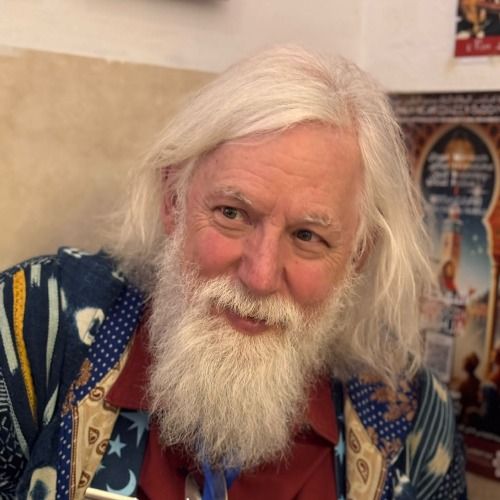
Our Guest - Rachel Smith
Rachel Smith was the producer of Hong Kong Stories, a locally based, community storytelling group in Hong Kong for 12 years. Recently returned to her birthplace of Canada, she travels the world with her stories, telling and hosting workshops wherever she goes. Rachel is always keen to develop opportunities to hear and share stories and share her love of storytelling with the community. When not involved in storytelling, Rachel is a multi-disciplinary artist.
- Website: https://www.senselessart.net/
- Insta: https://www.instagram.com/senselessart/
- LinkedIn: https://www.linkedin.com/in/rachel-smith-75632b346/
The Stories Featured in This Episode
- "Battle of Wills at Hadrian’s Wall" — Told by Rachel Smith A 40th-birthday midlife crisis walk along Hadrian’s Wall turns into a humbling, hilarious midnight showdown between a solo hiker in a bivy sack and a relentless, pinecone-throwing English squirrel.
- "The Miser and the Angel of Death" — Told by Jim An oral teaching tale from the Maggid tradition (via Daniel Lev) about a wealthy miser who tries to use a broken public vow to rid himself of his wife—only to discover that pretending to love someone can accidentally soften even the hardest heart.
- "Annie Gillen’s Friday Nights" — Told by Maria A deeply moving personal story born out of grief in Cork City, where a stranger reveals the clandestine acts of grace, chocolate bars, and comic-book storytelling Maria’s late mother used to bring light into a home shadowed by darkness.
Episode Chapters
- [00:00] Welcome to the Story Road Jim and Maria open the hearth from Fayetteville and Cork to introduce guest storyteller Rachel Smith, founder of Hong Kong Stories.
- [01:14] The Art of Doing Stupid Stuff Rachel discusses why true first-person storytelling relies on human imperfection and why surviving our own blunders creates the best tales.
- [02:25] Rachel’s Tale: The Wall, the Bivy Sack, and the Squirrel Rachel recounts her 84-mile solo trek across northern England, the pursuit of midlife independence, and the territorial woodland creature that forced her to redefine bravery.
- [12:30] Redefining Success & Wild Camping in Ireland The hosts reflect on the courage to change one's mind, walking the Ring of Kerry, sleeping under picnic tables, and the generous kindness of rural strangers.
- [22:45] Traveling the World in Ontario A whimsical detour through shared place names, how homesick Europeans mapped nostalgia across Canada and Upstate New York, and passport stamps from neighboring towns.
- [25:35] Jim’s Tale: The Miser’s Vow and the Hardened Heart Jim shares an oral Jewish folk story about a bitter miser seeking a loophole with the Angel of Death, discovering that practicing kindness transforms reality.
- [33:10] The Maggid Lineage & Shaggy Dog Wisdom Jim and Maria unpack the lineage of oral teaching tales passed down from teacher to student and how simple parables carry heavy truths.
- [36:20] Legacy Voices and Emotional Truth Maria reflects on experiencing Jim’s transformative "Legacy Stories" workshop in Marrakech, learning how witnessing specific virtues unearths buried memories.
- [39:00] Maria’s Tale: Cadbury Chocolate and Comic Books Walking through Cork in fresh grief, Maria encounters a stranger who unveils the secret Legion of Mary visits her mother made to protect and uplift a struggling family.
- [47:05] Tell Your Scars, Not Your Wounds Rachel, Maria, and Jim explore the vital boundary between authentic vulnerability and unhealed trauma dumping, emphasizing the healing power of storytelling from a place of resilience.
- [53:15] Giving the Listener Permission to Feel Why great stories never announce their moral: allowing the audience to take what they need and find their own mirrors in the teller’s truth.
- [57:30] Marrakech, 27 Languages, and the Crossroads Ahead Reflecting on the international storytelling gathering at Jemaa el-Fnaa and looking ahead to the next crossroads on the Story Road.
Key Takeaways: Transformational Insights
- Tell Your Scars, Not Your Open Wounds: Authentic personal storytelling is therapeutic, but it is not therapy. Sharing from our scars allows us to transmit hard-won resilience and wisdom, whereas performing from an open wound can lead to overwhelming trauma dumping that diminishes both teller and listener.
- Redefining Bravery & Success: Wisdom often lies in knowing when to surrender stubborness. Choosing to pack up your bivy sack and walk two kilometers away from an aggressive squirrel is not a defeat; it is the grace to be a strong, independent person somewhere else.
- The Subversive Power of Covert Kindness: Maria’s mother demonstrated that real grace does not demand an audience or applause. By bringing ten chocolate bars, old comics, and a fearless presence into a fractured household every Friday night, she built a sanctuary of dignity that echoed across generations.
- Stories Don't Need Prescribed Morals: When a story is crafted with honesty and specificity, the teller does not need to dictate the lesson. Thirty listeners will walk away with thirty distinct insights based entirely on what their souls needed to hear.
Closing & Community Call-to-Action
Thank you for walking with us from Cork to New York and across the global hearth.
- Join the Conversation on Substack: Subscribe to the Healing Monsters Substack for deeper mythic reflections, personal essays, and behind-the-scenes audio dispatches.
Be safe on the Story Road until we meet again.
Transcript
Hello from Cork.
Jim:Hello from New York.
Maria:Is mise Máire, Seanchaí Chorcaí.
Maria:It's Maria, the Cork-based storyteller.
Jim:It's me, Jim, here in Fayetteville, New York.
Maria:We can't wait to tell you a few stories.
Jim:Well, welcome to this week's episode of From Cork to New York.
Jim:It's always a special week when we have our, our gatherings, but
Jim:this one is especially special.
Jim:Maria, say hello to us and then we'll introduce our guest.
Maria:Well, hello everybody.
Maria:It's great to be here again, and I'm really excited to talk
Maria:to our lovely guest today.
Jim:And our guest is Rachel.
Jim:Please give us an introduction to yourself, and I think you might
Jim:have a story for us as well.
Rachel:I do.
Rachel:So my name's Rachel Smith, and I'm a storyteller that originally, I originally
Rachel:started telling stories in Hong Kong with a group called Hong Kong Stories.
Rachel:And then I've just recently moved to Canada, and I tell
Rachel:true first person stories.
Rachel:I don't do fiction very well, for reasons.
Rachel:I've learned over the years that I'm just not very good at fictional
Rachel:tales, so, I both train and tell true first person stories.
Rachel:So I'm gonna start us off with a true story, and I've just, spoken briefly to
Rachel:Jim and Maria and realized that quite a lot of my stories involve wildlife,
Rachel:and maybe unfortunate encounters.
Rachel:When you're telling true first person stories, the question I get asked the
Rachel:most frequently is, "How do you come up with all these stories?" And the
Rachel:answer is, I do a lot of stupid stuff.
Rachel:And each time you do something stupid, it's a story.
Rachel:So there's always a light at the end of the tunnel.
Rachel:There's always like a, ah, this is, I'm an idiot, but I'm gonna
Rachel:get a good story out of it.
Rachel:So, so here's my story.
Rachel:I am standing next to a crumbling piece of stone in the British countryside,
Rachel:and I'm congratulating myself for finally making a good decision.
Rachel:I'm standing next to a piece of Hadrian's Wall, built in 122 AD by
Rachel:Roman auxiliary forces, and still standing today in the north of England.
Rachel:I'd walked out of Newcastle City Center that morning at 8:00, oh, sorry, at 5:00
Rachel:AM, to walk the 84 miles along the wall because I am having a midlife crisis.
Rachel:I'm forty, and I feel like I'm spinning my wheels.
Rachel:I'm not going anywhere.
Rachel:I need to break up the monotony of this life and try something new.
Rachel:And I decide what I need is an adventure.
Rachel:But, uh, but I'm forty, so I need an adventure with a safety net.
Rachel:So I decide that I'm gonna go solo hiking, relying only on
Rachel:myself and my own two feet.
Rachel:I look around, researching for somewhere wild, but not so wild that I have to
Rachel:fend off bears, or I can't hitchhike to the nearest town and stay in a
Rachel:hotel if it gets too wet or too cold.
Rachel:England is perfect.
Rachel:It's a well-trodden path, plenty of pubs and cafes just off the path and no
Rachel:dangerous wildlife, which is important to me, especially since I come from Canada.
Rachel:No dangerous wildlife in Europe.
Rachel:Now, friends and family, when they learned of this plan, are horrified.
Rachel:"You can't go alone," they said.
Rachel:"A woman alone, it's not safe. It's not safe to travel by yourself." But I
Rachel:ignore their warnings and their fears because I'm a strong and independent
Rachel:woman, and I can do just about anything.
Rachel:My husband, who knows me best of all, says nothing.
Rachel:I gathered my equipment.
Rachel:I gather my water filter, a backpack, a first aid kit, a sleeping bag,
Rachel:and a compass, just in case.
Rachel:I'm not very strong, so I-- in order to reduce the weight that I'm carrying,
Rachel:I decide I'm not gonna bring a tent.
Rachel:Instead, I'm gonna bring a bivy sack.
Rachel:A bivy sack is basically a body bag with a hole in your fa-- where your
Rachel:face goes, so that you can breathe, but it's lightweight and waterproof.
Rachel:Very important.
Rachel:I roll all that up into a thirty-five liter backpack, and I am ready to go.
Rachel:And as I walk along this wall that stood the test of time, I
Rachel:start to feel a little better.
Rachel:All my worries about what I'm doing and whether I'm achieving something,
Rachel:they kind of melt away as I put one step in front of the other.
Rachel:I'm strong.
Rachel:I'm capable.
Rachel:I'm mistress of my own fate.
Rachel:I am in control
Rachel:I kept thinking about the auxiliary forces that had come and built this wall so many
Rachel:years ago, almost two thousand years ago.
Rachel:They'd come from all over Europe, and surely they hadn't always known exactly
Rachel:what their purpose was or what they were doing, but they managed to achieve
Rachel:something and build this thing that had lasted for almost two millennia.
Rachel:I, too, was going to build something that would last.
Rachel:I, too, knew my way forward.
Rachel:It's six PM on my first day, and I have walked twenty-nine kilometers.
Rachel:My knees are wobbling, and I'm sure my pack is twice as heavy as when I set out.
Rachel:I wanted to stop, but I needed to find just the right place
Rachel:for my first night's sleep.
Rachel:I didn't think I was able to walk very much further because the one thing
Rachel:that I hadn't actually managed to prepare for was do any training at all.
Rachel:I was just walking on sheer nerves alone.
Rachel:I need to find the right place for my first night's sleep
Rachel:alone in the wild of England.
Rachel:Up ahead, I see a grove of pine trees carefully planted in neat straight
Rachel:rows 'cause it's England, and none of their forest is actually original.
Rachel:Oh, perfect, I think.
Rachel:The pine needles will make a cushion on the forest floor.
Rachel:There's a slight fold in the landscape just off the path that creates
Rachel:the perfect hollow that I can hide behind for privacy and comfort.
Rachel:So I go.
Rachel:I unpack my pack.
Rachel:I have a brief dinner of cheese and bread, and I get ready for bed.
Rachel:I brush my teeth with my water bottle.
Rachel:I climb into my bivy sack, and I'm laying there warm and comfortable on
Rachel:the forest floor, reading my Kindle.
Rachel:Thousands of books, really long battery life, doesn't weigh as much as a book.
Rachel:And I congratulate myself on the first day on the success of this adventure.
Rachel:And then…
Rachel:and then he appeared.
Rachel:His small, beady black eyes and pointed face look out from
Rachel:behind a nearby tree trunk.
Rachel:I was startled at first, but then I laughed at myself.
Rachel:It's, it's only a squirrel.
Rachel:He rags his tail at me, and he runs around the trunk of a tree a few
Rachel:times before he comes out on a branch just above my head, and he stands
Rachel:up on his hind feet and his paws out in front of him, and he goes, "Eek!"
Rachel:And I'm doing that quietly because I realize most people are probably
Rachel:listening on headphones, and I don't wanna ruin your hearing, but it was loud.
Rachel:I didn't even know squirrels could make that noise.
Rachel:But
Rachel:I am not going to let it bother me because I am a human, and it is a squirrel.
Rachel:So I turn up the brightness on my Kindle, and I continue to read, and the squirrel
Rachel:jumps to another tree and keeps going
Rachel:At me very aggressively.
Rachel:I pretend I don't hear it.
Rachel:I'm probably sleeping on one of its favorite spots for
Rachel:hiding nuts or something.
Rachel:But it's a squirrel, and they're famously not very bright, so I ignored it.
Rachel:I ignored it as it hopped from tree to tree, never very far away,
Rachel:but it continued to scream at me
Rachel:He's very persistent, but I am very stubborn.
Rachel:I'm a human.
Rachel:He's a squirrel.
Rachel:I'm not going to let this bother me.
Rachel:I'm a strong and independent woman.
Rachel:What kind of person would I be if I let this squirrel get the better of me?
Rachel:I put my book away, and I zip up my zip bivvy sack to my
Rachel:neck, and I turn my back to him.
Rachel:He continues.
Rachel:Sometimes he gets a bit closer, sometimes higher up, sometimes lower down.
Rachel:It's a test of wills, me against the squirrel, but I am willing
Rachel:to face new challenges, and I'm not going to be intimidated.
Rachel:Finally, the gloaming of dusk is there, and the frantic scrabbling
Rachel:and eerie sounds stop, and I am basking in my own success.
Rachel:I am-- I have won this battle of wills.
Rachel:There's nothing to be frightened of here in this English countryside.
Rachel:All of those naysayers and doubts that I had are just falling away.
Rachel:I am a strong and independent woman.
Rachel:Even a manic squirrel can't scare me away.
Rachel:What can a squirrel do anyway?
Rachel:So my self-satisfaction is lulling my weary body into a deeper
Rachel:sleep when suddenly, thwack, something hits me on my stomach.
Rachel:I sit up encased in my cocoon, and I look around.
Rachel:In my lap, there's a pinecone, one of the ones from the trees above.
Rachel:I look up, and I can just make out the tops of the trees in the late
Rachel:evening breeze swaying back and forth.
Rachel:It must've been shaken loose by the wind.
Rachel:I lay down again, and far above me, I see the flash of a leaping gray
Rachel:body and a bushy tail high above.
Rachel:And then, thwack, thwack, another pinecone, two of them
Rachel:landed on my sleeping form.
Rachel:Thwack, thwack, two more come down from above, and carried on the wind in the
Rachel:darkening night is the eerie cry of
Rachel:So I thought about it for a while.
Rachel:And then I calmly and collectively got out of my warm bed, turned
Rachel:on my flashlight, and stowed all of my belongings in the pack.
Rachel:I wedged my swollen, aching feet into my shoes, threw my pack on my back, and
Rachel:trudged another two kilometers in the ever-darkening gloom of night to an open
Rachel:pasture and the sheltering branches of an old oak tree with no other trees around.
Rachel:I was not defeated.
Rachel:I was not lessened by my encounter.
Rachel:I just realized with calmness and acceptance that I can be a strong
Rachel:and independent woman somewhere else.
Jim:Oh.
Maria:Oh my God.
Jim:Delightful.
Maria:I'm laughing so hard.
Maria:Stupid things.
Maria:Oh my God, I love it, I love it.
Maria:I, uh, brave things, you know?
Maria:Brave woman heading off out into a forest, or even into a field on
Maria:your own in nothing but a sleeping bag with the face cut out, you know?
Maria:It's just-
Rachel:I d- I didn't, I didn't think the bravery was going to be about squirrels
Maria:well- Well, see, that's the whole thing, you don't know, you know?
Maria:And you were talking about, earlier on when we were, w- um, when we were
Maria:talking about story, you were saying, "I couldn't imagine the battle," you know?
Rachel:Mm, mm.
Maria:I can't imagine, and I have some imagination, I can't imagine
Maria:myself heading off out into the nothingness on my own with nothing
Maria:but a faceless sleeping bag.
Maria:There's just no way.
Rachel:Well, to be honest, I like the, I like the bivy sack much more than the
Rachel:tent, because the tent gives you this false sense of security- … and you
Rachel:can't see outside of it, whereas the bivy sack, you can see what's going on.
Maria:Yeah?
Rachel:You know what I mean?
Rachel:Exactly.
Rachel:It's no big deal.
Maria:Exactly.
Rachel:Well, I did grow up in Canada.
Rachel:We did a lot of camping, so, you know, but I can't camp in Canada because
Rachel:there's bears and raccoons and, you know-
Maria:Yeah
Maria:… Rachel: other beasties.
Maria:So.
Jim:Well, and you, and you demonstrate another great strength,
Jim:and that is redefining success.
Rachel:It is very important to redefine success.
Rachel:Important.
Rachel:I did think about it for a long time.
Rachel:I did think, you know, "No, I'm not, I'm, I'm gonna sit here." And then
Rachel:I thought, you know, a strong and independent person could, should be
Rachel:able to change their mind as well.
Rachel:Absolutely.
Rachel:That's
Jim:Right.
Jim:Yeah.
Jim:That's right.
Rachel:You know, otherwise it's not strong and
Rachel:independent, it's just stubborn.
Maria:Yeah.
Maria:So Rachel, how long did you stay out there in the wilds of the Hadrian Wall?
Rachel:It took me eight days to walk the whole way.
Rachel:Um, two of the nights I met up with a friend and stayed at a campsite,
Rachel:because this, uh, the English call this wild camping- wh- what I did,
Rachel:and, and it's not necessarily legal.
Rachel:Um, but because I don't have any, again, I'm not using a tent, so I'm not- Yeah
Rachel:I'm not putting any tent pegs in the ground, I'm not starting a fire.
Rachel:So technically, all I'm doing is napping.
Rachel:Yeah.
Rachel:You know, I'm just napping at night.
Rachel:So because there's no damage done, I felt no guilt whatsoever, and all
Rachel:the subsequent nights were all fine.
Rachel:Yeah.
Rachel:Um, it's so easy to camp when you don't need to have a big space
Rachel:or don't need to set a campfire.
Rachel:I actually went down and, and walked, uh, the Ring of Kerry as well- What?
Rachel:… a couple years later.
Rachel:No.
Rachel:But I did that in 14 days, 'cause it was a lot longer.
Maria:Oh, my goodness.
Maria:Any errant wildlife, no sheep or anything to tell us about?
Rachel:On one part there was all these signs saying, "Don't camp
Rachel:here, don't camp here," and I found a field, and I was laying down, and
Rachel:then they brought the, these ponies and let them loose in the field.
Rachel:And I was trying really hard to, like, not let the farmer know that I was there-
Maria:Yeah
Maria:… Rachel: because I just was like, "I'll just leave, and then they won't need
Maria:to be upset or anything like that." But they went to pick some berries,
Maria:and they just weren't leaving.
Maria:And I'm like, "Uh…" So I had to stand up and say, "Hi, I'm here.
Maria:Uh, I'm just resting."
Maria:I can just imagine.
Maria:I can just imagine the, the-
Rachel:They were very, very kind.
Rachel:Um- Yeah … and you know, I just slept along the side of
Rachel:the path that night instead.
Rachel:Um- … but you know, the field was completely empty.
Rachel:I checked, and then they came up and, and, and let the horses loose in there,
Rachel:and that could be quite dangerous-
Jim:That could be bad, yeah
Rachel:'cause they can step on you, yeah.
Rachel:Yeah.
Rachel:Um, but yeah, lots of, lots of camping.
Rachel:I, there was… I stayed in a hostel in, in a town that has
Rachel:a name that I can't pronounce.
Maria:I was going to ask you was it the Four Winds.
Maria:Obviously not that one then.
Rachel:It started with a C. I tried to get out to Skellig Michael-
Maria:Ooh,
Rachel:wow … as well.
Maria:Yeah.
Rachel:And I walked, I walked 14 kilometers out of my way to get down
Rachel:to the port, and then it was too windy, and I had to walk back, and I
Rachel:had to sleep in the park that night.
Maria:Oh my God.
Maria:Yeah.
Maria:I know that park.
Rachel:Well, if you would've looked under a picnic table- … in August
Rachel:2017- Yeah … you might have found me.
Maria:Oh, my goodness, that's amazing.
Maria:But I… aren't the views worth it though?
Maria:You know, even-
Rachel:Oh, it's beautiful.
Maria:It
Rachel:is beautiful.
Maria:It is beautiful.
Maria:Yeah.
Maria:You know?
Rachel:Yeah, Ireland itself is gorgeous.
Rachel:And just the most amazing things, like a one point I had actually
Rachel:sprained my ankle slightly, and I was staying in… it, I wanna say it's
Rachel:something like, it's ends with Daniel.
Maria:Caherdaniel?
Rachel:That's it, Caherdaniel.
Rachel:And I w- I, I'm pretty sure that's where it was.
Rachel:Anyways, I'd walked down t- I'd left my pack in a hostel, and
Rachel:I'd walked down to the water.
Rachel:It was only about four kilometers, so it wasn't too far, and bec-
Rachel:without a pack, it's not so bad.
Rachel:And there was a gentleman in a, in a truck just outside of this little cafe that I
Rachel:stopped at, and I thought nothing of it.
Rachel:I said hello, 'cause it's Ireland, so you say hello to everybody.
Maria:Everyone,
Rachel:yeah.
Rachel:And then I went and had my coffee, and it was very nice.
Rachel:And, um, as I was leaving, this man is still sitting there, and he says,
Rachel:"I saw you walk in, and I saw you were limping, so I thought I'd just
Rachel:wait and see if you wanted a ride back to wherever it is you're going."
Rachel:And I was like, "Sure." Sure.
Rachel:So he drove me back four kilometers, uh, four, four kilometers the other way.
Rachel:Oh.
Rachel:And it was just, it was just such a lovely thing, like- Yeah … I
Rachel:mean, I'd had coffee for, like, 45 minutes, and he was just waiting.
Maria:Yeah.
Rachel:And it wasn't creepy, and it wasn't weird.
Rachel:It was just, like, Ireland.
Maria:It's, yeah, it's just part of the culture, you know?
Maria:Yeah.
Maria:It's amazing.
Maria:So-
Rachel:It was lovely.
Maria:Yeah.
Maria:So you spent some time in Kerry.
Maria:That's absolutely amazing.
Maria:And did you tell any stories as you walked along the way?
Rachel:Not, not really, 'cause I was walking… I walked by myself, so
Rachel:there's not really… I mean- I mean-
Rachel:I, I only stopped t- one… The two nights, I stayed in the
Rachel:hostel, 'cause honestly, it was, it was a bit rainy those nights.
Rachel:Those are the only two nights that it was rainy.
Rachel:And, um- I, you know, I, I went to the pub one night, but I… Everybody
Rachel:was singing And they kept saying, "Oh, you, you must be able to sing." And I'm
Rachel:like, "No, don't make me sing, please."
Rachel:"Don't make me sing." There
Rachel:wasn't really a lot of opportunity elseways to be able- Or
Rachel:cur- … to tell this story, so-
Maria:I'm telling you- 'Cause there w- there was nobody else around … I
Maria:was sitting in a car with a man who'd offered me a lift, and I told
Maria:him the story about Hadrian's Wall.
Maria:They'd still be talking about it in Kerry now.
Maria:You know?
Maria:So just- And
Rachel:I didn't have as many encounters with people.
Rachel:Like, I didn't have as many spaces.
Rachel:Yeah.
Rachel:There was one, one point just outside of Cork-
Maria:Oy.
Rachel:And it was a path.
Rachel:It wasn't, it wasn't along… 'Cause it's all path.
Rachel:You don't really walk along the road very much- Yeah … if you're hiking.
Rachel:And there was a gentleman there, and he was wearing a, like a, a as a North
Rachel:American, I find this really charming.
Rachel:He's wearing, like, a knitted Irish sweater.
Rachel:Yeah,
Maria:an Aran, an Aran jumper.
Rachel:An Aran jumper.
Rachel:And he had three kids, and they were… There was this little culvert bridge,
Rachel:like a stone, tiny little stone bridge, not a proper bridge, just really
Rachel:a rock over top of a small stream.
Rachel:And the kids are there, and they're kind of, like, looking underneath this,
Rachel:and they're kind of poking around.
Rachel:And I'm like, "Oh, what's, what's happening here?" To the
Rachel:only adult, you know, 'cause the kids are all, like, under eight.
Rachel:And he's like, "Well, they think that there's bones under there,
Rachel:and it's an archeological dig," and I'm just going along with it.
Rachel:So the kids, they come up and they, they gave, they were, like, showing us a stone.
Rachel:I'm like, "Oh, that's definitely bone," you know?
Rachel:"That's definitely."
Maria:You got in on the story.
Maria:I'm proud of you, Rachel.
Maria:It was
Rachel:good.
Rachel:Yes.
Rachel:It was good.
Maria:That's it, you know.
Rachel:Oh.
Rachel:And I walked to the top of some of the mountains, 'cause you go over mountain
Rachel:ranges, and you're standing up there and there's a, there's a man there, in the
Rachel:Wellington boots and with a shepherd's crook and calling in his sheep, and
Rachel:I just think I'm in a fairy tale.
Rachel:It's just amazing.
Jim:Yeah.
Rachel:Standing and watching this.
Rachel:I've, it w- just the whole time in Ireland was magical.
Maria:Oh, that's lovely to hear.
Maria:Mm-hmm.
Maria:We love hearing that, you know?
Rachel:It's wonderful.
Maria:Yeah.
Maria:And, um, now we, we've a lovely storytelling festival,
Maria:and it's coming up soon.
Maria:It might have happened by the time this episode goes out.
Maria:And Jim is actually coming for it this year in, in-
Rachel:Fantastic … in
Maria:Listowel, yeah.
Maria:But Rachel, you'll be delighted to know that we have a brand-new greenway.
Maria:So Ireland pulled up some of its train tracks, no reason.
Rachel:Oh, lovely.
Rachel:Ireland.
Maria:Lovely.
Maria:Yeah, you know?
Maria:And, um, but because they went through lovely flat ground, and because the ground
Maria:is prepared they then make them into cycle greenways that go on for miles and miles.
Maria:And this one starts in Listowel, in County Kerry, where the festival is happening.
Maria:And so people meet down by the River Feale, and there's beautiful
Maria:showers and there's lovely, you know, kind of bathroom facilities-
Maria:Ah … which you can appreciate when you're wild camping, you know?
Maria:But also there's, there's beautiful places to just, uh, rest and
Maria:meet characters, like you said.
Maria:you know?
Maria:So yeah, you might have to come back to the Listowel story.
Rachel:Oh, it sounds great.
Rachel:Um, I was asking Jim how you pronounced it, because we have a town very close
Rachel:to where I am right now called Listowel, which is spelled exactly the same way-
Rachel:Yeah … but pronounced differently.
Rachel:We also have a, we also have a Delhi.
Rachel:But it, we do pronounce it Delhi.
Rachel:Yeah, that's right.
Rachel:There's a lot of names here that you would recognize.
Maria:Yes.
Maria:Yeah.
Maria:Well, we had, we had a really brilliant experience during COVID, because we
Maria:met up with St. John's storytelling crew- over the live pandemic.
Maria:Yeah.
Maria:You know?
Maria:Yeah.
Maria:And we realized that some of the tellers in St. John's had exactly
Maria:the same accent as the lads in Kerry.
Maria:I'm from the neighboring county of Cork, right?
Maria:Yeah.
Maria:And sometimes we even have difficulty in deciphering some
Maria:of the Kerryisms, you know?
Maria:But these boys had absolutely no problem- … understanding every single
Maria:word, and the nuances down to the crazy jokes, you know, that, that would be told.
Maria:So - I am not at all, uh, surprised to find that there's a Listowel in Canada.
Maria:I am surprised they changed the pronunciation of the name.
Rachel:Well, it's one of those things with our, you know, um, Ontario accents,
Rachel:but who knows what's, what's going on?
Rachel:Homesick Europeans named my country.
Rachel:Yeah.
Maria:Yeah.
Rachel:So, um, a few years ago, I actually made my mother a little
Rachel:passport with her own insignia on it.
Rachel:You know, the, um… And she, uh, and her best friends from high
Rachel:school do these trips around Ontario where they, they travel around
Rachel:the world without leaving Ontario.
Maria:Yeah.
Rachel:You know, we've got, we've got all kinds of- Of places, mostly European,
Rachel:but some from further afield as well.
Rachel:Um, and she just goes into these towns.
Rachel:You go into Brussels, you go into Paris, you go into Manchester.
Jim:You know,
Rachel:that's- And Cork.
Jim:That's wonderful because here in central New York we have the same thing,
Jim:and I think that's a very clever idea.
Jim:We have Utica, we have Ithaca, we have Mexico, we have Paris.
Jim:I mean, I, I, I think I've just got a new idea.
Rachel:Yeah, well, she… Her and her friends, they go around.
Rachel:It's a, it's a good excuse to take a trip.
Jim:Sure, sure.
Rachel:And they'll go to, you know, they'll go to Brussels, and they'll just
Rachel:kind of wait until they see somebody walking along the road, or if there's
Rachel:a store or gas station or something like that, then they'll go up to them
Rachel:and say, "Would you mind signing my passport saying that I have been here?"
Maria:Yeah.
Maria:I love it.
Rachel:Right?
Rachel:That's great.
Maria:Yeah.
Maria:You know, I think I might have to do that, that passport
Maria:trip at some stage, you know?
Rachel:Sure.
Rachel:Oh, you should, you should come.
Rachel:I've, I've now settled in Canada.
Rachel:I have, I have room.
Rachel:Yay.
Rachel:I'm no longer in Hong Kong where I don't… I have a tiny apartment with-
Rachel:Yeah … with, uh, only one bedroom.
Maria:Yeah, you know.
Maria:I mean, we, we'll talk about it another day, but I, I, you know, I'd love to talk
Maria:about your time in Hong Kong as well.
Maria:Mm-hmm.
Maria:So Jim, we have to pencil in that for another-
Jim:Yes,
Maria:yes … another- Another episode … down the road, you know?
Maria:Um, so Jim, h- has it, has it changed-
Jim:I, I- … now to you?
Jim:I have a story, of course.
Jim:Yay.
Jim:But it's, it's a story that matches the mood, not the topic.
Jim:Oh.
Jim:So, um, but it-
Maria:We can take it.
Jim:Yes.
Jim:It's a story that might make you concerned at its opening, but
Jim:let's just say it all ends well.
Jim:So there was this miser, and he was the most miserly of
Jim:misers that you could imagine.
Jim:He wouldn't give a single penny to anything.
Jim:He was very wealthy, of course, 'cause he kept all the money to himself.
Jim:But never would he give a single thing away.
Jim:And you might have thought that he had a very good life that way, but his wife
Jim:was not the easiest person to live with.
Jim:And the two of them were always fighting with each other.
Jim:The slightest thing and they'd be… It just would get out of control so quickly.
Jim:He didn't know what to do.
Jim:He certainly didn't want to divorce her because then she'd get half of what he
Jim:had, and he couldn't tolerate that idea.
Jim:So all else failing, he went to the rabbi.
Jim:The
Jim:rabbi's sitting in his room with all his books around him.
Jim:And he said, "Rabbi, there must be a way that I can legally kill my wife."
Jim:And the rabbi said, "What are you talking about?
Jim:That's crazy." He says, "Now Rabbi, you're, you're a great and, you
Jim:know, just talented and learned man.
Jim:You… There's a way.
Jim:You, you've got all these books.
Jim:You must be able to find a way."
Jim:Well, who knows why he did it?
Jim:But the rabbi decided that was an intriguing question, and so he started
Jim:to look and read, and finally he went back to the miser and said, "Oh,
Jim:turns out there is a way. There is a way. The high holidays are coming up,
Jim:and if you were to make a vow publicly of importance and then break that vow,
Jim:then the Angel of Death, as a punishment, would come and take your wife."
Jim:And the man said, "And, and it's, it's legal?" You know?
Jim:He said, "Absolutely.
Jim:But, you know, you'll pay the price of your wife dying, but,
Jim:uh, yeah." And the miser was, "Great." He said, "That's wonderful.
Jim:Let's, let's do it.
Jim:What do, what kind of vow do I need to make?" And rabbi said, "Well, you, you
Jim:could make a vow that you were going to give a huge sum of money to the
Jim:temple, and then publicly announce that you weren't gonna do it, after all.
Jim:Break the vow.
Jim:Make the vow in public, break the vow in public."
Jim:And the miser looked at him and he said, "Well, now wait a minute.
Jim:I'm not gonna actually have to give any money, am I?" He said, "No, no, no, you
Jim:make the vow and then you break it, so you're not, you're not giving any money."
Jim:He said, "The bigger the vow, the better."
Jim:So he agrees.
Jim:And on Rosh Hashanah, he gets up in front of the whole congregation, and
Jim:he pledges this huge amount of money to the temple, and everybody is shocked.
Jim:I mean, here's this guy who's never given a penny, and he's
Jim:giving thousands and thousands!
Jim:Well, the holidays end and the president of the congregation comes
Jim:with the board to his home and says, "Thank you for your pledge.
Jim:You know, we're, we're ready to, to collect." And the miser just stands there
Jim:with the biggest grin on his face and puffs up his shoulders and says, "I'm not
Jim:giving you a penny." "But you promised." "I know, and I'm breaking that vow."
Jim:And he thinks, "I've done it. I've done it."
Jim:Well, a couple days go by and he and his wife are arguing like ever before.
Jim:I mean, there's just, just the slightest thing will set them
Jim:off, but she's still alive.
Jim:So he goes back to the rabbi and he says, "Rabbi, but
Jim:it didn't work."
Jim:And the rabbi says, "Look, look, here's the problem. You and your wife fight
Jim:so much that the angel of death doesn't know she's your wife. You know, you ha-
Jim:you have to treat her a little better so that he recognizes that she's your wife."
Jim:"Well, what does that mean?"
Jim:"Well, you could buy her some flowers, you could buy her some chocolate."
Jim:"You mean I have to spend money on her?"
Jim:He said, "Well, yeah, but, you know, just put on a show." So sure enough,
Jim:he goes out and he buys a bunch of flowers, and as he's coming in
Jim:the door, he just holds them out.
Jim:"Here, these are for you." And she swats them away and says,
Jim:"What do I want those for?"
Jim:So he knows he's gotta try a little harder.
Jim:Next time it's chocolate, and she takes it.
Jim:And the next day he walks in and he kinda smells his favorite meal being
Jim:cooked in the kitchen, and she's starting to soften a little bit too.
Jim:And a couple more days go by, and they're not fighting anymore.
Jim:And that night, as they're laying in bed, she starts to cough,
Jim:and he realizes it's working.
Jim:But you know what?
Jim:He realizes something else too.
Jim:He really does care for her.
Jim:And now he's worried because, you know, the Angel of Death is gonna find her and
Jim:take her, and he doesn't wanna lose her.
Jim:So he goes back to the rabbi and he says, "Rabbi, Rabbi,
Jim:I've made a terrible mistake.
Jim:I don't want to lose her.
Jim:It turns out I do love her after all.
Jim:What do I do?"
Jim:And the rabbi says, "Simple. Honor your pledge."
Maria:Dun, dun,
Maria:dun, dun, dun.
Maria:Oh, I love it.
Maria:And I really want to know at the end, did he honor the pledge?
Jim:Oh, yes, of course.
Jim:Yes, yes.
Maria:Did he love his wife more than he loved his money?
Jim:Well, we leave that to the listener, but I think, you know.
Jim:Exactly.
Jim:Yes, yes.
Maria:You know, my mother had a load of stories like that where
Maria:she'd go, "Well, if we go down this road of the ending, and then if we
Maria:go down the other road," you know?
Maria:Yeah.
Maria:And you'd be like, "Oh, my God." And as children, we always picked the happy road.
Jim:Of course.
Jim:Of course.
Maria:And as teenagers You know, it kind of flipped.
Rachel:You picked the other side?
Jim:Picked the other side.
Maria:That's it, you know.
Maria:But, uh, what, what a great story.
Maria:I love how, you know, kind of the wise stories are often the simple stories.
Jim:Yeah,
Maria:yeah.
Maria:The simplest ones, you know?
Maria:And I've heard a, a load of lovely stories like that from Omar Belaarej as well.
Jim:Mm-hmm.
Jim:Mm-hmm.
Maria:You know, coming from his tradition, the Muslim tradition.
Jim:Yeah.
Maria:Um-
Jim:Well, and especially the Amazigh tradition.
Jim:Yes.
Jim:Even more than the Muslim one.
Jim:Yeah.
Jim:Um, they have wonderful stories, too, don't get me wrong.
Jim:Yeah.
Jim:But the Amazigh stories tend to be these teaching tales that have a-
Maria:Yeah, absolutely … a,
Jim:a nice thing at the end.
Maria:Yeah.
Jim:That's what we call a shaggy dog, um, you know, just a, um-
Maria:A shaggy dog story.
Maria:A, a,
Jim:so a shaggy dog- Yeah … it's got a, it's, it's got a long tail
Jim:and- Yeah … and it wags at the end.
Maria:And of course, we, we have the, the black dog stories,
Maria:which are horror stories.
Maria:Ah.
Maria:So I think I like the shaggy dog stories more than the black dog stories.
Maria:The shaggy dog stories.
Maria:Yeah.
Jim:So
Jim:again, more, more of a joke than a story, but it's a nice… It's, I like it, so.
Rachel:Yeah.
Rachel:It's a nice story.
Rachel:Yeah.
Rachel:It is a nice story.
Rachel:I did have to, as soon as you said, um, uh, I, I did ask earlier, we're not
Rachel:recording the video, so I feel safe.
Rachel:But as soon as you said, "How do I kill my wife," I had to go and get
Rachel:a snack 'cause I'm like- … I have to eat while this is happening.
Rachel:Well, isn't that…
Maria:you know, we, we have this, um, habit, you know, it's not, it's
Maria:not really a set rule, but we have this habit of, uh, pressing mute
Maria:when somebody is telling a story.
Maria:Mm-hmm.
Maria:But sometimes I think we should really leave it off because- … the
Maria:reactions are something else.
Maria:So when you kill, when you said, you know, kind of kill the wife,
Maria:I think the two women here went
Jim:Well, and I, I just, I should mention, I forgot to mention when I
Jim:was telling it, I had learned that story from Daniel Lev who was a-
Maria:Daniel
Jim:Love
Jim:… Lev.
Jim:Lev, correct.
Jim:Meaning heart.
Jim:My teacher was one of three people that had been given,
Jim:uh, ordination as a Maggid.
Jim:Mm-hmm.
Jim:And he was the second of the three.
Jim:And so- Wow … the three of them were, were dear friends, and
Jim:we would meet with each other.
Jim:And, and Daniel taught me that story.
Jim:So-
Maria:Oh,
Rachel:that's fabulous
Rachel:… Jim: it's one of those stories-
Rachel:Yeah, it is
Rachel:fabulous … that is not written anywhere.
Rachel:Um-
Maria:Yeah
Maria:… Jim: so it's a truly oral- We love those.
Maria:Yeah, yeah.
Jim:Yeah,
Maria:the ones that come down- Yeah
Maria:through the oral and the aural, you know?
Maria:Yes.
Maria:I love those stories, yeah.
Maria:Um, and of course, it, it threads out to me, it draws out
Maria:the red thread of story to me.
Maria:And, uh, even listening to you earlier on, Rachel, um, and talking about our
Maria:different storytelling traditions, mine are, uh, are so based in the imagination.
Maria:And as a drama therapist as well, you know, I, I talk about the safety of
Maria:the, you know, kind of it's so far from the real experience, you're grand.
Maria:You know?
Maria:Even no, no matter even if you tell, uh, scary bits.
Maria:But Jim has this marvelous workshop called Legacy Voices, and when we were
Maria:in Marrakech the last time, I said, "Can you show me the, the Legacy Voices?"
Maria:And an hour later when the tears were running down my face, and the
Maria:snots were, like, you know, very, uh, present- … I was like, "Why did I ask?"
Maria:But no, it, it was, it was absolutely, it was so heartening, you know?
Maria:And it's based on stories that have happened in front of you, so they are
Maria:stories you've witnessed, you know?
Maria:And it's based on qualities that you admire.
Maria:And the trick is you know those qualities, and he goes through a whole process
Maria:of where you pull those, those, um, qualities out, and then you have to
Maria:go through your memory and see where you've witnessed those qualities in
Maria:the one person or in the one incident.
Maria:Then you tell a story, and this is where the tears and the, you know…
Maria:Because generally it's a story that has got you in the heart or the gut or
Maria:both, which was, was my case, you know?
Maria:And then the next thing that you do is you make it safe by giving
Maria:it to somebody else to tell.
Maria:And at the time I would've been incapable of telling the
Maria:story that I'm about to tell.
Maria:Mm-hmm.
Maria:You know?
Maria:So, um, thank you, Jim, for making me cry, and I really mean that.
Maria:Thank you for making me cry.
Jim:I'll make you cry any time, Maria.
Maria:Any time, you know?
Maria:And I, and I say to all our listeners, if you get a chance to go to one of
Maria:Jim's workshops, especially the one called Legacy Voices, um, go, you know?
Maria:And go prepared to come out emotionally naked.
Maria:So, um, and here's the story:
Maria:I was walking through Cork City, and it was another dark day after a sad
Maria:loss because my mother had gone to her reward, and my mam was some storyteller.
Maria:And there w- it was that time in the grief process where you could be thinking
Maria:of something really funny that she did, and that woman was funny, and then find
Maria:yourself crying for the loss of that.
Maria:So you didn't know where you were.
Maria:You know, you'd be laughing one minute and then devastated the next.
Maria:So I was still in that very fresh phase of the loss of my mother, and
Maria:I'm walking through Cork City, and I'm not really seeing the people there,
Maria:and I'm not really in this present moment, when a woman that I've never
Maria:met before looms up in front of me, and she gives me that hard look.
Maria:And I kind of look back and I think, "Where do I know her from?" Or I, I, I
Maria:search for her in my memory, and no, still I'm looking into this stranger's face
Maria:and I'm thinking, "I have never set eyes on you before." And then she speaks to
Maria:me, and she said, "You're Annie Gillen's daughter, aren't you?" And I said, "I am."
Maria:And she said, "Oh, you're the bulb of her." And that's an Irish way
Maria:of saying you're so like her that you're like the bulb of a flower.
Maria:You're, like, almost the same.
Maria:And I say, "Thanks very much," and it kinda gets me in the heart.
Maria:And then she says the next thing, which is, "I feel like she was my mother, too."
Maria:And that feels like it's too much, and the rage shoots up from the soles of
Maria:my feet and out through the top of my head because the loss is still very new.
Maria:And I look at her with that savage eye look, and she gets that she might have
Maria:offended me, and she said, "Look, I just want to explain." And I just wanted to
Maria:walk away, but she steps forward, and I feel unable to leave in the middle of
Maria:this busy street, this busy city street.
Maria:And she said, "I wasn't as lucky as you in my home."
Maria:And she said, "There was a lot of children in my family.
Maria:There was 10 children, and my father was- Like a demon, and we lived in hell.
Maria:And then I was like, "Okay," you know, "What is she going to say next?" And then
Maria:she said, "And then on a Friday evening, there'd be a knock on the door." And
Maria:when I heard that, I had another surge of rage, because I remember when my mother
Maria:started going missing on a Friday night.
Maria:And on those Friday nights, our family would pile into the car, and we'd all
Maria:go to the supermarket, and there'd be guaranteed chocolate cake, and we'd wander
Maria:around the supermarket for an hour and a half, and it was lovely family time.
Maria:And then suddenly, my mother wasn't available on Fridays anymore, and there
Maria:was no explanation, and she never told us where she went And now I was finding out.
Maria:And she said, "Your mother would come to our door on a Friday night,
Maria:and she'd knock on the door," and my father would open it, and
Maria:he'd try to frighten her away.
Maria:And in her lovely soft, slow accent, she'd say to him, "Well, you know now, boy, it's
Maria:me or the social worker." And he'd step back from the door, and he'd let her in,
Maria:but he was glowering all over her, you know, you know, so even threatening her in
Maria:the silence of his big physical presence.
Maria:And in our house, we'd be in our vests and our, you know, kind
Maria:of in our little shorts, and the house is really clean because we
Maria:had to clean it with toothbrushes.
Maria:And my mother would say, "Am I getting a cup of tea?" And he
Maria:wouldn't even use words, but he'd nod at somebody, and they'd go
Maria:off, and they'd put the kettle on.
Maria:And then my mother would sit down at the table, and we'd all take a sigh of relief.
Maria:And she'd open that massive bag she always had, and I knew that bag, my mammy's bag.
Maria:And she'd dig her hand in right up to her elbow, and she'd pull out 10 small bars
Maria:of chocolate, and she'd fan them along the table like the treasure that they were.
Maria:And then she'd say to my father, "Well, you know now, I'm not leaving
Maria:until they eat that chocolate." And they'd fall on it, all, uh, all of
Maria:us, and I promise you, nothing ever tasted as sweet as that thin bar
Maria:of dairy milk Cadbury's chocolate.
Maria:And then she'd dip her hands back into the bag again, and she'd pull out the old
Maria:comics, and I thought, "Oh, our comics." And she put them on the table, and then
Maria:she'd say, "Now you know that unless each one of those children tells me a
Maria:story from those comics, I'm not leaving.
Maria:And it doesn't matter if they're reading it or if they're making a story
Maria:up from the pictures that they see."
Maria:Because she knew that some of us hadn't learned to read yet, and she wanted
Maria:to extend this lovely bubble, bubble of heaven in this hard, hard place.
Maria:So we'd tell her stories, and we'd try to make them last as long as possible.
Maria:And when finally it was finished, she'd get up and she'd say, "Well,
Maria:goodbye now, and I might see you next week." And off she'd go.
Maria:And this woman told me that this saved her life and her sanity, and
Maria:that she waited every week for this precious hour on a Friday evening.
Maria:She also shared with me that she was a nurse now, that she
Maria:learned her caring from my mother.
Maria:And I was still too cross in that moment to be able to take that story on board.
Maria:And a soft Irish rain had begun to fall, and the woman looked at me
Maria:for a very deep moment, and then she turned and she walked into the crowd.
Maria:And I've never met her since, and I'd love to meet her, and
Maria:I'd love to be able to tell her, "Yeah, she was your mother, too."
Maria:Because now I have the distance of time.
Maria:But you know the most amazing thing?
Maria:You couldn't tell my mother anything.
Maria:We'd always say, "Telephone, telefax to my mother," and the
Maria:news would go out there, you know?
Maria:But this was her Legion of Mary work, and it was sacred to her, and
Maria:she did not open the traps of her jaws about the work that she did.
Maria:And I have since learned that was not the only person where my mother was a
Maria:light in their life and never talked about it and never needed for us to
Maria:know or anybody else to know that story.
Maria:Sin é mo scéal.
Maria:That is my story.
Rachel:That's beautiful.
Maria:Thank you, Rachel.
Maria:So yeah, because, you know, in my tradition, we don't normally tell stories
Maria:from our own experience, but actually, that feels like an important story.
Jim:Mm-hmm.
Maria:You know?
Maria:And in doing that work with Jim, I was thinking, "Actually, there might
Maria:be a place for some of those stories-
Rachel:Mm-hmm.
Maria:Mm-hmm … in my stories, in my storytelling."
Rachel:We often say that storytelling through first-person storytelling the
Rachel:way that we do it, it's not therapy, 'cause therapy's something different.
Rachel:But it is therapeutic.
Rachel:And there's something really powerful about being able to share the caring
Rachel:and the moments of your life and other people's lives around you with other
Rachel:people because it's all about how to make that connection and how to make
Rachel:people feel like they aren't alone.
Rachel:You know, this has happened to me.
Rachel:Um, this is my truth.
Rachel:This is my experience.
Rachel:And being able to share that in a place, um, where people are listening-
Maria:Mm-hmm
Maria:… Rachel: means that you make it safe for other people to share-
Maria:For sure … in their own lives.
Maria:Yeah.
Maria:And that's really, it's, it's wildly exciting.
Maria:You know?
Maria:It really is, you know?
Maria:But then I-
Rachel:And really powerful!
Maria:Speaking for the, the other side of the coin, though, you know, there's some
Maria:subjects even in this day and age that are taboo, and you can't talk about them.
Maria:And one that I come across all the time when I go into, uh, the
Maria:corporate sector is people can't talk about a controlling boss, you know-
Maria:or somebody who micromanages.
Maria:So it's very difficult to speak from your own experience in that.
Maria:But you can say, "Once upon a time-" "… there was a really controlling king."
Rachel:With the true storytelling, we do try and, and ask when people come,
Rachel:'cause we workshop everything as well.
Rachel:We always workshop, um, before we go up on stage, because we wanna know what
Rachel:it sounds like to the audience as well.
Rachel:But we do try and get people when they come to understand that if
Rachel:this is a raw, bleeding wound, you should not be telling this story yet.
Rachel:You should be talking about your scars, not your wounds.
Rachel:And it can still be emotional and powerful, but, I had an experience several
Rachel:years ago at a, at a, quite a famous poetry competition, and it just seemed
Rachel:like trauma dumping all over the place.
Rachel:Yeah.
Rachel:You know, it was just trauma after trauma after trauma, and whose trauma's worse?
Rachel:And the, it just, it became this trauma competition, and it, it
Rachel:was, it was unpleasant- um, and distasteful, um, because of that,
Rachel:for me at least, as a listener.
Rachel:And it, I thought it felt it diminished everybody's experience, whereas if you
Rachel:come and you workshop a story and you can tell it and you can get that experience,
Rachel:it's uplifting rather than disheartening.
Maria:And I think that's where the traditions come together- because
Maria:I remember my great-grandmother, who was born in 1878 and came
Maria:through crazy stuff, you know?
Maria:So it was, like, even the, the birth of Ireland as a republic, two world wars.
Maria:Uh, you know, she was one of the children that came after
Maria:the famine and stuff like that.
Maria:And she said, "Always talk through your resilience, because then
Maria:that's what you pass on," you know?
Maria:And that's exactly what you've just spoken into, Rachel.
Maria:And I love the way you put it.
Maria:You know, talk through your scars and not through the wounds, the open wounds.
Maria:You know?
Jim:And I, with, with your permission, Maria, I'd like to say a little bit
Jim:more about that moment that your story was shared and then, and talk about
Jim:the larger issue, and that is when you told that story to your partner- It
Jim:wasn't a story that you had told before.
Jim:Um-
Maria:Or remembered before
Jim:Or even remembered.
Maria:This- So I was deep in the wound when I- Yeah … when I, when
Maria:that story came up to the surface.
Maria:Yeah.
Jim:Right.
Jim:But you had, you know, that was, that was underneath.
Jim:Mm-hmm.
Jim:And, you brought it to us, but then somebody else told the story.
Jim:Yeah.
Jim:And I think there's another benefit to all that, Rachel.
Jim:Not only tell your scars, not your wounds, but hear your own story.
Jim:Yeah.
Jim:Um, and, and hearing- It was- There's,
Maria:there's- … a liberating, yes.
Jim:Yeah, yeah.
Jim:Yeah.
Jim:The little, other feature of this work, is that the person goes in and they're
Jim:trying to recall an anecdote that illustrates a particular value for them.
Jim:But when the story is told, first by them to their partner and
Jim:then by, by the partner to the group, they don't name the value.
Maria:Oh, that was shocking.
Jim:So, so you don't, you don't say, "This is a story about X." And at
Jim:the end you don't say, "This was a story about X." What you do instead
Jim:is you ask everyone what values, plural, did you hear in this story?
Jim:And there's always a, a number.
Jim:I mean, and-
Rachel:Yeah
Rachel:… Jim: because we're much more than a single valued person.
Rachel:Yeah.
Rachel:Um, and so- So- … all that richness comes out.
Rachel:Yeah.
Rachel:Go ahead
Rachel:… Rachel: when, when we're workshopping our stories, that's one of the things
Rachel:that we're really looking for, one of the things that we always get rid of.
Rachel:The, the first one is, you know, name your characters, make sure your plot,
Rachel:make sure your, your scene is set, the, your timing's set so nobody's guessing.
Rachel:And then you get to that, "And the moral of the story is," or, "What I
Rachel:really learned," or, you know, and, and we're always like, "You've gotta
Rachel:take that out." Because if you've told your story well, that's already clear.
Rachel:And if you haven't, then you need to go back and revise
Rachel:it 'cause it's not ready yet.
Jim:I absolutely agree, and other people will hear other things in it.
Maria:Yes.
Jim:Yeah.
Jim:If, if you, if you say- That is what I was going to say
Jim:this is what it means, you've just robbed them of their meaning.
Jim:Yeah.
Jim:Mm. Um, perhaps.
Jim:Perhaps.
Maria:So like they say in the, in the old Irish tradition, that you
Maria:could tell 30 people a, a story and 30 different versions will go
Maria:away with 30 different viewpoints.
Maria:You know, and what I found absolutely amazing in, in all of this work, you
Maria:know, um, w- with Jim, was that the two, you know, be- you're asked to
Maria:pick three, and then you throw the first one away because your mind is
Maria:interfering, if I'm right, Jim, you know?
Maria:And then you're left with two.
Maria:And so I had, uh, two qualities.
Maria:And those two qualities poked this memory into fruition, you know?
Maria:Um, but they were not mentioned.
Maria:You know, when people said, "Well, what qualities did you see in the story?"
Maria:There was loads of beautiful qualities.
Maria:I agreed with all of them, and the two that inspired the memory never came up.
Maria:Which was amazing, you know?
Rachel:Just shows that, that when you throw something out there, people take
Rachel:what they, what they need from your story.
Maria:What they need.
Maria:Yes.
Rachel:Yeah.
Rachel:Exactly right.
Rachel:And the way that we measure success in a story, it was… So, um, in Hong
Rachel:Kong Stories, which is where I learned to do storytelling and, and taught how
Rachel:to do storytelling for many, uh, over a decade, um, the way that we measured
Rachel:whether it was a successful story, 'cause there, there is some amount
Rachel:of measurement that you have- Yeah
Rachel:is you tell this story.
Rachel:So I told a story, for example, of bringing my husband home
Rachel:to Canada for the first time.
Rachel:He's from Hong Kong.
Rachel:It's a snow storm.
Rachel:I'm driving him from metropolis to smaller metropolis to tiny town to
Rachel:the countryside, and he is looking as though I'm gonna murder him.
Rachel:And I'm excited 'cause I'm going home to my family.
Rachel:Yeah.
Rachel:You know, our two different points of view and how I finally realize, like, he thinks
Rachel:I'm taking him out to a field to kill him.
Rachel:And, you know, I tell this story, and it was very successful because
Rachel:afterwards I had people coming up and going, "I remember the first time
Rachel:I brought my partner home," or, "I remember going to there, the first…"
Rachel:And, and that is the measure of success.
Rachel:Do you have a connection with people?
Rachel:Does it make them think of their own stories?
Rachel:Do you trigger something that allows them to then carry that story forward in their
Rachel:own, not my story, but your story forward?
Maria:Yeah.
Rachel:That's a successful story.
Maria:I, I remember having, um, a lovely experience like that.
Maria:I made a story, and the story was called, um, Ma- Máire Rua, and it was about a
Maria:woman that could, um, it, that had a fox as a best friend, Máire Rua, you know?
Maria:And I told it first to Eamonn Keenan, and the two of us were like, "Oh, my God.
Maria:This is such a special story." And we call that the, a, like a, a channeling story.
Maria:And then he said to me, "You need to tell that story at your next
Maria:storytelling." And I said, "No, that's in a pub, and this is a sacred story.
Maria:I will tell the story in the…" And he went, "No, girl." He said, "You
Maria:need to tell everyone this story." And then he kept tipping at the corner
Maria:of my consciousness until I told it one night in the pub, and four people
Maria:sought me out after the storytelling session, and each one claimed the story
Maria:from a very different perspective.
Maria:It was absolutely humbling.
Maria:And I went, "Oh, my God," you know?
Maria:So since then, I've told all my stories wherever they come out in my gut.
Maria:Mm. You know?
Maria:Mm-hmm.
Maria:So 'cause you're reading your audience all the time, you know?
Rachel:Mm-hmm.
Rachel:Yeah.
Rachel:But- It's fascinating how that works, and, um, amazing the kind
Rachel:of connections that you can make.
Rachel:Um, and again, for me, it's the, that you're allowing other people to have
Rachel:the permission to tell their stories.
Rachel:As hard as they are, as individual as they are, you're giving them the gift
Rachel:of telling the story, and the only way for me to be able to do that is to take
Rachel:the risk of telling this personal story.
Rachel:Mm. Because then they can see me risking my, um, my story on you, and then
Rachel:you have permission to risk your own.
Maria:Very, very true, and very nice.
Maria:Bef- before we finish, you know- Yes … uh, Jim and Rachel, do you know when we
Maria:meet on the story road, when you actually find that we have arms and legs because
Maria:we're back on the Zoom now and the little square box- Isn't it absolutely amazing?
Rachel:It is.
Rachel:So- Absolutely is
Rachel:… Maria: uh, yeah, you know.
Rachel:So the last time I met you, Rachel, was in Canada, the Contour de
Rachel:Canada, um- Mm-hmm … storytelling.
Rachel:And Jim, Marrakech- Yeah … when we spent so much time, and it was such
Rachel:a privilege, on the trains going to Casablanca- … and telling stories.
Rachel:Yeah.
Rachel:Um, so, like, you know, it's, it's when we actually meet on the story road-
Rachel:Mm and we tell stories- Mm … to one another, and what a privilege that is.
Rachel:So Rachel, I'm wondering, are you coming back to Marrakech?
Rachel:I,
Rachel:I am, I am planning to, yes Way.
Rachel:Um, I've had a lot of upheaval in the last couple of months, but, uh,
Rachel:I- Yeah … I'm, I'm fully planning to come back to Marrakech this time.
Rachel:Yeah.
Jim:Awesome.
Jim:As, as we say, God willing, and the creek don't rise.
Rachel:Exactly, exactly.
Rachel:If, if, if it, if it's meant to be it'll be.
Rachel:Exactly.
Rachel:But, uh, but no, I'm hoping to come back.
Rachel:Uh, I have big plans.
Rachel:Um, there's so much more I'd like to, to do this time, because last
Rachel:time I was just a bit overwhelmed.
Maria:Yeah.
Maria:The first time is like that, isn't it?
Maria:You know, because-
Rachel:It's a bit, it's a
Maria:bit mad … it's a … Uh, it's, yeah, and like there's 100
Maria:tellers from every corner of the globe.
Maria:Mm-hmm.
Maria:Like, you know, all of, all of the, um, different places on earth are- Mm-hmm
Maria:… represented by their storytellers.
Maria:So you have the responsibility of telling the stories from your
Maria:stones, from your place, you know?
Maria:Yeah.
Maria:And then there's always so much to hear, you know?
Jim:Well- Mm-hmm … and for me, one of the greatest statistics that came
Jim:out of that was that there were 27 languages used to tell the stories.
Maria:Imagine.
Jim:And I, you know, that's just delightful.
Jim:More languages than most people would ever hear.
Maria:Yeah.
Maria:Yeah.
Maria:It's really the place of East meets West, you know?
Jim:North and south, yeah.
Maria:And that big beautiful red square, El Fnaa Yeah, yeah … in-
Rachel:Center of the world
Rachel:… Maria: yeah.
Jim:That's right.
Jim:For sure.
Jim:That's right.
Maria:You know?
Maria:So but no matter where we- … wherever we meet again on the story road, it'll
Maria:be a complete pleasure, you know?
Rachel:Absolutely.
Rachel:It will.
Rachel:How could it not?
Maria:Yeah.
Jim:Yeah.
Jim:Well, Rachel, thank you so much for joining us today, and I'm, I'm sure
Jim:our paths may even cross here again.
Jim:Um-
Rachel:I hope so
Rachel:… Jim: uh, yes, absolutely, absolutely.
Rachel:I hope
Rachel:so.
Rachel:Sure.
Maria:Yeah, we have to find out about Hong Kong next.
Maria:We've heard about Canada today.
Rachel:Well, and I'm hoping to really get involved.
Rachel:I'm, I'm, I'm a little bit further away from Toronto where the major story
Rachel:centers are here, but that doesn't stop me from making one of my own.
Rachel:So I'm hoping to get, um, some story going around in my
Rachel:neighborhood as well, so never know.
Rachel:We've got some Halloween stories coming up.
Rachel:We can
Maria:work with
Jim:that.
Jim:You let us know.
Jim:Absolutely.
Jim:Well, for me, I just, I have to p- just jump over a very small pond by comparison
Maria:to- Yeah, true … very- And you
Rachel:can even just go around it.
Jim:Yes.
Maria:Yeah.
Maria:And I've heard, you know, the last time we went to the top of Canada, I think it
Maria:took me something like eight hours to fly.
Maria:And something similar- Yeah when I was going to, um, to Woodstock in New York.
Maria:But I believe Canada is, or sorry, Toronto, is some-
Maria:more like five hours away.
Rachel:From Ireland?
Maria:From Ireland
Jim:No.
Maria:I, they could have been 11.
Maria:It's,
Rachel:it's seven
Rachel:… Maria: Jim, is it seven?
Rachel:Jim is looking at me- Seven or eight … with a raised eyebrow, so
Jim:No, no.
Jim:Um- Yeah … Toronto is a little west of me.
Maria:Of you
Jim:So I, yes Yeah … yes
Maria:So similar time, yeah.
Maria:Yeah Similar time.
Maria:Yeah, it
Rachel:takes a seven, seven hours to- Ah … to fly.
Rachel:Righty-o.
Maria:Yeah.
Maria:And-
Rachel:But it's, it's an easy flight.
Rachel:They don't make you fly the plane yourself.
Rachel:So all you have to do is sit there.
Jim:You don't have to pedal
Rachel:Don't have to pedal.
Rachel:You're, you're absolutely fine
Maria:Get up and walk.
Maria:I remembered that when I was going to Woodstock.
Maria:I was like, "Oh, I can get up and walk this plane," which was lovely,
Maria:you know, because sitting for seven hours, I don't think I'm, I'm capable.
Rachel:Well, I've been flying back and forth to Hong Kong,
Rachel:and it's closer to 15 or 16, so
Maria:Oh, my goodness.
Maria:Whoa, yeah.
Maria:Yeah.
Jim:All right then.
Jim:Well, let's, let's say goodbye for now and till the next time.
Jim:Thank you again.
Jim:Thank you.
Rachel:Thank you.
Rachel:Thank you so much for inviting me, and it's wonderful to see you both again.
Maria:Will we say goodbye from Cork?
Jim:And goodbye from New York, but only for a while, because we'll be
Jim:back again with another episode.
Jim:Absolutely.
Maria:We can't wait to see you on The Story Road one more time, and from this
Maria:time till that, be safe on The Story Road.