The Waters of Truth
The Waters of Truth:
Hoarded Wells, Sacred Rivers, and the Magic of Spoken Words
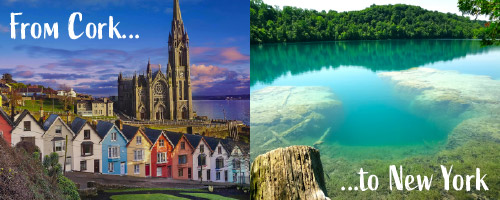
What happens when sacred water is hoarded by power, or unleashed through supreme sacrifice? From the sun-baked plains of Yorubaland to the ancient limestone springs of Cork, Máire and Jim sit by the hearth fire to explore how rivers mirror human longing, how myth preserves real history, and why our spoken words still hold the ancient magic of spells.
The Stories
- The Legend of the River Olu (Yoruba Folklore, Nigeria) — Told by Jim, gifted to him by Nigerian storyteller Titi Ogunnaike. A story of drought, maternal sacrifice, and a transformative river whose waters bestow the power of inescapable, world-shaping truth.
- The Formation of the Lough of Cork (Cork Folklore, Ireland) — Told by Máire (Maria). An ancient Irish tale of an arrogant king, a hoarded healing well, a salty feast, and the princess Fíor-Uisce whose fall beneath the water reclaimed life and joy for an entire community.
- The River Olu - on YouTube, as told by the Priest of the River: https://youtu.be/GJSVlyIA8Oc
The Chapters
[00:00] The Intimacy of the Hearth
- Máire and Jim welcome listeners into a cozy, two-host conversation, reflecting on the spaciousness of sitting together around the metaphorical hearth fire to trace the threads of folklore.
[01:08] The Transcriber’s Dream: Meeting Titi Ogunnaike
- Jim recounts how an early podcast led him to connect with Nigerian transcriber Titi Ogunnaike, whose yearning to preserve her grandmother’s vanishing Yoruba folklore launched a cross-continental storytelling journey.
[03:26] The Legend of the River Olu: Sacrifice in the Drought
- Jim narrates the woman’s version of the River Olu myth: a desperate mother who, after days of fruitlessly searching for water to save her dying children, shatters her empty calabash against the earth in holy grief, transforming her body into a living, healing river.
[08:00] The Gift of Truth & Descendants of the Stream
- Exploring the sacred law of River Olu: those who drink its first drop can speak only truth, and whatever they speak becomes real. Jim explains how water is still bottled and sent across the globe for newborn Children of the River.
[09:00] River Goddesses and Shared Soils
- Máire draws vibrant parallels to Ireland’s female river spirits (such as the River Bandon / Bandia) and the diaspora tradition of carrying sacred earth across oceans to root new generations.
[10:30] The Two Halves of the River: Male and Female Tellings
- Jim reveals what happened when Titi traveled with filmmakers to meet the King and Chief Priest at River Olu: uncovering a contrasting men’s version featuring a transformed father and a cursed calabash.
[16:05] The King of Cork and the Hoarded Healing Well
- Máire introduces the story of the Lough of Cork (Teach Rí), where a wealthy clan leader walled up a communal healing well (Tobar Leighis) to keep the suffering townspeople from partaking in its life-giving waters.
[21:26] Spiced Beef, Salty Feasts, and Princess Fíor-Uisce
- The King hosts a thirsty young suitor prince with salty chips and Cork spiced beef, sending his daughter Fíor-Uisce ("Pure Water") into the moonlit courtyard with an oversized crystal pitcher to draw from the fortified well.
[25:33] The Flooding Lough and the Submerged Feast
- Overbalanced by the weight of the pitcher and the high walls, the young lovers tumble into the deep spring. The water erupts over the castle turrets, restoring water to the singing people and creating Cork’s legendary lake, where an eternal banquet still whispers beneath the surface.
[27:56] Chipper Chips, Salt & Vinegar, and Cultural Memory
- A lighthearted, warm interlude on Canadian vs. Irish foodways, exploring salt, vinegar, chipper chips, and how simple sensory memories tie communities together.
[30:05] The Architecture of Magic: Words as Spells
- Máire recalls her grandmother’s revelation about the root of "spelling" as casting spells. Jim bridges the thought to the ancient Hebrew concept of D'var: a word that is simultaneously a thing, bringing reality into being through utterance.
[33:23] Living Without 'Yes' and 'No': The Action of the Irish Tongue
- Máire explores the linguistic wonder of the Irish language (Gaeilge), which historically lacked standalone words for "yes" and "no," grounding all truth in direct, embodied action rather than abstract absolutes.
[34:46] Blessings on The Story Road
- Jim and Máire bid their warm farewells from New York and Cork, sending listeners back out onto the path until the hearth fire is stoked once again.
Key Takeaways (Transformational Insights)
Water Cannot Be Owned; It Can Only Be Shared
- Both Yoruba and Cork traditions remind us that hoarding essential life - whether literal water, communal joy, or healing - inevitably brings calamity. Life belongs to the commons; attempts to lock it behind high stone walls will only invite the flood.
The Duality of Myth: Honor Both Halves of the Story
- The divergent male and female accounts of the River Olu teach us that folklore is not a rigid monolith, but an ecosystem. When we hold multiple versions of a myth without forcing them into sterile conformity, we honor the multi-layered truth of the community that birthed them.
Language as an Incantation (D'var)
- To speak is to alter reality. From the Children of the River who refuse disparaging words because they manifest as truth, to the ancient root connecting spelling with spells, our spoken words build or destroy worlds. Storytellers carry the ethical weight of what their tongues bring into being.
Speech Rooted in Action
- The Irish language’s rejection of passive "yes" and "no" reminds us to anchor our convictions in active verbs. We do not merely agree or disagree in the abstract; we choose to go or not go, to act or refrain, declaring presence through living deeds.
Closing & Community Call-to-Action
Every myth carries a forgotten medicine for modern disquiet. To delve deeper into the archetypes, seasonal rituals, and psychological beasts that shape our personal journeys, subscribe to our companion newsletter, the Healing Monsters Substack.
Until next time, travel safely on The Story Road.
Transcript
Hello from Cork
Speaker:Hello from New York
Speaker:Is mise Máire, Seanchaí Chorcaí.
Speaker:It's Maria, the Cork-based storyteller.
Speaker:It's me, Jim, here in Fayetteville, New York.
Speaker:We can't wait to tell you a few stories.
Speaker:Well, let's just say welcome to the next episode of From Cork to New York.
Speaker:You know, we've had a lot of guests recently, I feel like we're sitting
Speaker:around the, the warm hearth fire, just Maria and me and all of you
Speaker:and we get to tell some stories
Speaker:. I, I love having, uh, our guests for sure.
Speaker:But it does feel there's something spacious about just you and
Speaker:me and talking about stories.
Speaker:Yes.
Speaker:So I, I come with a story today and of course, a story about the story.
Speaker:And even you might say a story about the story about the story.
Speaker:Don't you boy, as they'd say over here.
Speaker:it was about 10 years ago, I actually had another podcast.
Speaker:Uh, it was called Storytelling Matters, and it ran for about a year.
Speaker:And this was in the days long before anything like, uh, AI
Speaker:transcriptions or anything like that.
Speaker:But I knew that I had to edit the episodes, and so I needed a transcript.
Speaker:And again, at that day, in that time, transcripts were pretty expensive.
Speaker:It was an expensive endeavor.
Speaker:And so I looked around online, and I found, someone who had
Speaker:just tremendous skills, and she lived, in all places, in Nigeria.
Speaker:The home of scam artists, as we like to think of it.
Speaker:But she was not a scam artist.
Speaker:Her name was Titi Ogunnaike, she lived in Lagos, but she was from the Yoruba people.
Speaker:And, uh, she started transcribing my episodes for me.
Speaker:And after many episodes, we were chatting, as we would often do, and she
Speaker:said, "I wish I could be a storyteller."
Speaker:And I said, "Well, you know, sure you can be a storyteller.
Speaker:Why do you wanna be a storyteller?" And she said, "Well, you know, all the stories
Speaker:from my grandmother are going away.
Speaker:Nobody's telling them anymore.
Speaker:I'm, I'm afraid they're gonna be lost." Well, she certainly got
Speaker:my heart on that one. And I said, "Well, I, I would love to help.
Speaker:Let me give you a hand.
Speaker:What kind of stories do you wanna tell?" And she said, um, "I wanna tell historic
Speaker:epics, you know, the history of our people." And I said, "That… okay.
Speaker:Do you have one story in mind?" And I'll tell you the story she
Speaker:told me, and then I'll tell you the story about the story after that.
Speaker:So in, in this part of Nigeria in that region where the Yoruba people live,
Speaker:there's a river called the River Olu.
Speaker:And this is the story of that river.
Speaker:So years and years and years ago, there had been a terrible drought.
Speaker:And it was not only making it difficult for the plants to blossom and feed
Speaker:the people, but the animals were drying out and starving, and even
Speaker:the people were having it just… It was a terrible, terrible time.
Speaker:It went on for on and on and on.
Speaker:Until finally this one family, a hunter and his wife and their
Speaker:two children, boy and a girl.
Speaker:The hunter said, " We've got to leave.
Speaker:If we stay here, we're gonna die."
Speaker:He took his spear, and they started their trek, and they crossed over hot, dry land,
Speaker:and even the trees were just almost bare.
Speaker:And the woman was carrying a calabash on her back with water, and they
Speaker:were trying to use it very sparingly, but of course it was hot and dry.
Speaker:Until after a few days, they were almost out of water, and the hunter
Speaker:said, "Look, I see a stand of trees off there in the distance.
Speaker:I'll go catch us some game, and at, at least we'll have something to eat,
Speaker:and maybe we'll find some water."
Speaker:He said, "I'm gonna leave in the morning before it's hot, and
Speaker:I'll be back before sundown." He left, and he didn't come back.
Speaker:Didn't come back at all.
Speaker:The children now, I mean, that was kind of the last straw.
Speaker:They were crying, they were hungry, were thirsty.
Speaker:"Mother, can't you help us?" And it broke her heart.
Speaker:And she said, "Tomorrow morning before the sun comes up, I'll go out and
Speaker:I will find us some water, and I'll be back before the sun goes down."
Speaker:And she draped her shawl over them to shield them from the sun
Speaker:and headed off looking for water.
Speaker:She returned at sundown.
Speaker:She hadn't found any water.
Speaker:And now the children were weeping, but so weakly you could hardly
Speaker:hear them, whispering almost.
Speaker:"Mother, we're hungry. Mother, we're thirsty. Mother, we're gonna die."
Speaker:And she was devastated.
Speaker:And she said, "I will go out tomorrow morning and I will find us water. And
Speaker:when I come back, everything will be okay." And she left the next morning
Speaker:before sunrise, and she came back, back at sundown, and her calabash was empty.
Speaker:She had no water.
Speaker:And the children looked up at her and they pleaded with their eyes because their
Speaker:throats were too dry to even make a sound.
Speaker:And in great rage and frustration, she took that calabash from off of her back.
Speaker:She raised it up to the sky and she smashed it in front of her.
Speaker:And in that moment, she was transformed into the river Olu.
Speaker:And the river Olu flowed, and her children drank from it and were healed, and they
Speaker:grew strong, and they started a new group called the Children of the River.
Speaker:And it turns out that that river, which flows to this day, is known
Speaker:to be healing for anyone who will come and bathe in it or drink in it.
Speaker:And if you happen to be a Child of the River, which means you're born from
Speaker:that line, and the first drop of water that you drink is from the river, then
Speaker:not only are you strong and healthy, but you can only speak the truth.
Speaker:If you say something, it must be true, and if it isn't true
Speaker:yet, by speaking it, it will be.
Speaker:So that's the story, but there's a lot to follow it.
Speaker:Can I just say whoa to this story?
Speaker:And then you can tell us the story about the story.
Speaker:Oh, that was lovely, Jim.
Speaker:Isn't that an amazing story?
Speaker:Amazing.
Speaker:And very resonant because, uh, all of the rivers in Ireland are female, you know?
Speaker:And, um, a lot of them are, you know,a goddess.
Speaker:For example, the Bandia in Bandon is a, is a, actually means goddess.
Speaker:And often it's because somebody has made a huge sacrifice and become part of
Speaker:nature, and it's very Morrigan, you know?
Speaker:So, so loads of resonances there.
Speaker:But, um, yeah.
Speaker:Well, I will tell you, when she told me this story, and I was of course blown
Speaker:away by it too, I, but I, I, when we were done chatting about it, I said, "I, I just
Speaker:have one confusion, and that is I thought you were gonna tell me an historic epic.
Speaker:And, and this is a wonderful magic story, but, you know, I thought you
Speaker:were gonna tell me some history." And she looked at me and she
Speaker:said, "No, that's history." Yeah.
Speaker:You know, there's… Yeah.
Speaker:And so that was in my early days when I was still understanding
Speaker:how magic is, is real like that.
Speaker:Sure.
Speaker:Well, I was so taken with it that I said, um, "Well, this is a story
Speaker:you, you could tell, obviously.
Speaker:What would you like to do next with it?" And she said, "Well, I would like to go
Speaker:visit the River Olu, and I'd like to have the people there tell me this story." And
Speaker:so I put together a project for her, and I sent… I, unfortunately I couldn't go.
Speaker:I wanted to, but she- Aw … she traveled up to the River Olu.
Speaker:with a film crew, with a videographer crew.
Speaker:And she told stories to the children, and she met the king of
Speaker:the river, king of the community and the, the priest of the river.
Speaker:And the priest told the story of the river.
Speaker:And what do you know?
Speaker:It was a different story.
Speaker:I love that.
Speaker:Because in the priest's story, the one who's transformed into the
Speaker:river is the father, not the mother.
Speaker:Yeah.
Speaker:The mother doesn't appear in the story at all.
Speaker:And the story, the, the river is celebrated as a private
Speaker:celebration by the men of the river.
Speaker:So we have a woman's story, and we have a men's story.
Speaker:And a man's story.
Speaker:All sorts of interesting things that emerge from that, but one of them that
Speaker:I'll just share is that this is such an active part of these people's lives, that
Speaker:there are descendants of the Children of the River who live around the world now.
Speaker:And the priest of the river will bottle the water, and ship it to any
Speaker:family that he knows is about to have some children so they can have that
Speaker:first taste of water from the river.
Speaker:River Olu.
Speaker:Oh, major resonances again.
Speaker:Because, um, you know, people from Ireland often brought the earth with them, and
Speaker:they would plant their children's feet in the, in the earth of Ireland, you know?
Speaker:In the Bandia River, because I've mentioned that, there is a guardian of the
Speaker:source of the water, and they go back six generations, and she says probably more.
Speaker:But that was when writing started.
Speaker:So they, she can go back that far, and she mines like a warrior woman the
Speaker:source of the River Bandia in Bandon.
Speaker:It's amazing, you know?
Speaker:And I lived a few miles down the road, and I didn't know this.
Speaker:You know?
Speaker:So look what a story like this opens.
Speaker:Jim, I'm fascinated to find out.
Speaker:That, uh, film, would you be able to put a link to that film
Speaker:for our followers and for me?
Speaker:I will put that up, yes.
Speaker:I'm happy to do it.
Speaker:It's on YouTube now.
Speaker:So it's, it's already public.
Speaker:It was produced by the filmmakers there.
Speaker:It's at times a little over the top with thanking Transformational Storytelling.
Speaker:But that's okay.
Speaker:But one other little thing about that is, when it was time for her to go to
Speaker:visit- She wanted to have an invitation from the king to do this, of course.
Speaker:And she said to me, "Jim, you have to write a letter to the king- … so
Speaker:that, so that he'll accept me." And I said, "I don't know how to
Speaker:write a letter to a king", you know?
Speaker:She said, "Just write a letter." So I wrote a letter, and she sent
Speaker:it to him and got no response.
Speaker:She took a copy of it, and she found a time when the king was at a parade
Speaker:or something like that, and she pressed forward and handed him the
Speaker:letter and said, "You must read this."
Speaker:The Jim letter.
Speaker:The Jim letter.
Speaker:Unfortunately, she no longer lives there.
Speaker:She moved to Canada with her husband.
Speaker:And, and she's starting a family.
Speaker:But, um-
Speaker:Amazing, though.
Speaker:Yeah, yeah.
Speaker:And Jim, do you h- have the male version of the story?
Speaker:Yes.
Speaker:And that's what, in the video, it's the priest who's telling the
Speaker:story, so it's the male version.
Speaker:It's the male version.
Speaker:Great.
Speaker:But I, I think, you know, I, I'm, I- it's obviously set off
Speaker:the red threads in my head.
Speaker:But you can think about this, Jim.
Speaker:Maybe you can end the show today with the male version.
Speaker:And we can have a sandwich of the river.
Speaker:Well, there's two differences.
Speaker:I'll just mention them now.
Speaker:One is that it's the man and there's the husband, there is no mother.
Speaker:And the other is, that because the villages that he visited in
Speaker:search of water refused to fill his calabash, they've cursed the calabash.
Speaker:So you can no longer take water from the River Olu using a calabash.
Speaker:That's the price the calabash paid for not receiving the water.
Speaker:For not receiving the water.
Speaker:Ohh!, I kind of feel it's not the calabash's fault.
Speaker:It was the hands that held it.
Speaker:Well, no.
Speaker:No, but, but- The hands that held it … but that was…
Speaker:They don't wanna be reminded of the fact that-
Speaker:Yeah.
Speaker:Oh my God!
Speaker:That's amazing, you
Speaker:know?
Speaker:Well.
Speaker:Well Jim, that's, that's after s- like, there was three or four stories
Speaker:came into my head and left my head in this island country surrounded by
Speaker:water with loads of rivers, you know?
Speaker:And in Cork, it's the River Lee.
Speaker:And we have, uh, also a number of, in our limestone ground, we have a
Speaker:number of lakes, and it's funny that our, , ancestors did not know where,
Speaker:what the source of those lakes are.
Speaker:And this particular lake is in Cork City, which you will be visiting
Speaker:soon, so I can't wait to see you when you arrive, and we might even go and
Speaker:take a look at this magical lake.
Speaker:This is the story of that lake, and I can also say that an opera has been
Speaker:written in the last three years by John Spillane about this lake, and it's an
Speaker:opera with a punk song in the middle of it all, and they represent the, uh, people
Speaker:of Cork, the ordinary people of Cork.
Speaker:And it's absolutely stunning.
Speaker:I have the double CD.
Speaker:But also it's been a live performance in Cork Opera House by John Spillane.
Speaker:Uh, but I would have heard this story growing up, and one of my favorite
Speaker:storytellers, Kate Corkery, who lives in London but is from Passage
Speaker:West, one of the first professional storytellers I ever heard from my
Speaker:own city, tells this story as well.
Speaker:And it's in the collected Cork stories by History Press, in case
Speaker:any of our followers um, have the History Press collection.
Speaker:Once upon a time, in this beautiful city, the city of Cork,
Speaker:there lived many happy farmers.
Speaker:And there was one clan leader, and he was known as the Rí.
Speaker:He was known as the King of Cork at that time.
Speaker:And he lived out in a place that is now called the Lough of Cork.
Speaker:But in those days, it was just called the House of the King.
Speaker:Teach, Teach Rí, the House of the King.
Speaker:And he had so much wealth.
Speaker:He had over 40 cows in his herd, and he had cream for his breakfast
Speaker:every morning on top of his porridge.
Speaker:And he had one daughter, and he prayed for a son, but the son never came.
Speaker:His daughter was called Fíor Uisce, which means pure water.
Speaker:And she was named for a very special well on this man's land.
Speaker:It was known as the Well of Healing, Tobar Leighis, Tobar Saibhris.
Speaker:It was known as the Well of Healing and the Well of Wealth, because
Speaker:when you drank from its water, whatever ailed you left you.
Speaker:And that could even have been thoughts that were pressing down on your
Speaker:head, lists that you couldn't stop making, things that you couldn't stop
Speaker:being worried about, or it could be a cut on your hand or a gash in your
Speaker:side if you'd been egged thread, if you'd been fighting with people.
Speaker:And so everybody climbed down the little hollow to the little well, and
Speaker:they took their fill of the water.
Speaker:Well, one time, the Rí of Cork, he was entertaining.
Speaker:And all he could hear was singing and chatting and
Speaker:talking outside of his window.
Speaker:And he said, "Who's that?" And the servant said, "Sure, that's the
Speaker:people of Cork, your kingship."
Speaker:And he said, "Tell them leave." And they said, "But we can't.
Speaker:They're here for the water of the well." And he said,
Speaker:"Well, I'll put a stop to that.
Speaker:I'll put a stop to that tomorrow." And so he asked his men to gather all
Speaker:of the lovely white limestone of Cork and a little bit of the red sandstone.
Speaker:And those are our colors, the red and the white, known as the blood and the
Speaker:bandages of Cork, because if you play hurling and you come off the field
Speaker:without a mark, you haven't done it right.
Speaker:And so he built this wall around the well.
Speaker:And the people turned up.
Speaker:And they said, "What's going on?" And they said, "Why is there a door on the top of
Speaker:this wall locking us out from the water?" And one woman said, "I need it right now.
Speaker:I have a terrible headache." And then they could hear the Rí shouting from
Speaker:the top window, "Get away from my well.
Speaker:It's on my land, and it's mine."
Speaker:But you can never say that about water, because water is life.
Speaker:Uisce bheatha.
Speaker:Water is life, and it's so much life that we call whiskey the water of life.
Speaker:And the people looked up at him in shock, and their words were stolen
Speaker:from their mouth because they could not believe what he was saying.
Speaker:And the captain of the guard said, "Get away from the well." And so they did,
Speaker:and the people suffered and suffered.
Speaker:And then he thought, "It's about time my Fíor-Uisge got married.
Speaker:So I'm going to invite likely lads to come and throw the glad eye at her, and
Speaker:we'll see who she will like the best.
Speaker:Well, the very first prince to come came from across the river, across the River
Speaker:Lee, from the north side of Cork City.
Speaker:Some people call that the best side of Cork City.
Speaker:And over he came on his horse, and he had all of his servants in attendance.
Speaker:And the king, he gave them salty things to eat, the best potato
Speaker:chips you could get, hot as you like, soaked in salt and vinegar.
Speaker:And then on top of that, he gave them beef, but it was spiced beef.
Speaker:We're still famous in Cork City for our spiced beef, but it would leave you
Speaker:really looking for a glass of handsome cooling water or a glass of wine at least.
Speaker:But he kept all beverages out of sight and off the table.
Speaker:And they were coming to their third course.
Speaker:They'd had the salty soup.
Speaker:They'd had the salty beef, which was, uh, spiced also.
Speaker:They had the chips with salt and butter running down, and vinegar, and
Speaker:they could barely take their tongues from the roof of their mouth for the
Speaker:want of a cooling glass of water.
Speaker:And when the people started complaining, the king was delighted because he wanted
Speaker:to show off the water from his well, and he told them at length about all its
Speaker:healing properties until the people were thinking, "Oh my God, is he ever going
Speaker:to give us a sup of anything at all?"
Speaker:And they could barely listen to him.
Speaker:And then he turned to Fíor-Uisge, his lovely daughter, and he said, "Go
Speaker:down there to the well and bring me up some water." And she said, "Dad, I'm
Speaker:talking to the prince." She was having such a lovely time with the prince.
Speaker:And he said, "Right now!" And the prince, seeing what was going on,
Speaker:and being a complete gentleman, and having fallen for our Fíor-Uisge,
Speaker:he said, "Sure, I'll go with you."
Speaker:And then she said, "Of course, I'd love to go with you." And she kind of wafted
Speaker:up out of her seat, because she was on cloud nine, and she began to walk out of
Speaker:the room, and the prince followed her.
Speaker:And as she was going out the door, her father gave her a big pitcher, a glass
Speaker:pitcher, and Cork was famous at one point for making this in Shandon of Cork City.
Speaker:And she took this crystal pitcher, and they walked into the night, and
Speaker:everybody ran to the windows to see this sight of that beautiful young girl and
Speaker:the prince under the full moon, making their way towards the locked well.
Speaker:And the captain of the guard opened it up, and she climbed up the three
Speaker:or four steps to the top, and then she tried to put the pitcher in, but she
Speaker:nearly fell in herself because it was as big as herself and it was heavy.
Speaker:So the prince caught her around the waist, and everybody watching went,
Speaker:"Aah," 'cause it seemed so right.
Speaker:And then the two of them began to tip forward so that she
Speaker:could lean down into the well.
Speaker:But her father, Rí Corcaigh, well, he had made that wall so
Speaker:high that they couldn't be done.
Speaker:And eventually, in the trying to do it, the two of them fell in, and so
Speaker:did the pitcher with a big splash.
Speaker:Now, you might think that that was the end of the story, and that the
Speaker:water had taken his child for him taking the water from his people.
Speaker:But then, that's not the end of the story at all, for it is said that
Speaker:they went down, down into the water.
Speaker:And as they did, the water began to rise, rise, rise up, and it overflowed
Speaker:the walls of the well, and it overflowed the field that it had lived in.
Speaker:And it came, and it drowned the castle.
Speaker:And as the water rose, the people began to drink, and they were
Speaker:so happy to drink because they were so thirsty at this stage.
Speaker:And in their joy, they sang, and they danced.
Speaker:They told stories, and they told jokes.
Speaker:And the water kept rising, and it went up over the turrets of the castle,
Speaker:and much, much deeper than that.
Speaker:And it made the Lough of Cork City a famous bird sanctuary now.
Speaker:And if you sit at the edge of the lough, like I have done, on a sunny day, when
Speaker:it's very still, and you listen, you can hear the party going on under the water.
Speaker:And when things have been put right, and when people can once more sup from the
Speaker:well that was the lough and is the lough right now, well, then you never know.
Speaker:Maybe we'll see that castle again.
Speaker:Maybe the Rí of Cork will come back.
Speaker:Maybe Fíor-Uisge will have the good news that she's married her prince.
Speaker:Sin é mo scéal.
Speaker:That is my story.
Speaker:What beautiful images of each step along the way.
Speaker:And, and, uh, I can only imagine the, the joy at finally being
Speaker:able to drink again from the well.
Speaker:Yeah.
Speaker:Yeah, yeah.
Speaker:That's it.
Speaker:Yeah.
Speaker:You know?
Speaker:Because, because when you're thirsty, that's when you value water, you know?
Speaker:Yeah, yeah.
Speaker:So, yeah.
Speaker:Amazing.
Speaker:You know, it's interesting.
Speaker:You, um, a, a very minor thing, but in this country we don't often have
Speaker:vinegar with our chips, … unless you come from Canada, which has retained
Speaker:that, and my family is from Canada.
Speaker:So I'm one of the few around me that always has vinegar with my chips.
Speaker:It's the- Oh … the best way to have it There's nothing like
Speaker:chipper chips with vinegar.
Speaker:Yeah.
Speaker:You know?
Speaker:Yeah.
Speaker:Yeah, so, like, i- it's, it's something that if you get chips in a chipper.
Speaker:which, which are the best chips, you're gonna get loads of salt
Speaker:and vinegar on them, and then you'll be drinking for the night.
Speaker:You know?
Speaker:Well, and in fact, I was just in Maine for a week, and Maine does
Speaker:offer the vinegar with the fish and chips there, so it's- Yeah
Speaker:yes.
Speaker:Very good.
Speaker:So it's, but it, uh, my mouth is watering.
Speaker:Yeah.
Speaker:They'd say here that your teeth are swimming in your head- Yes … for
Speaker:the need of a, of a chip, you know?
Speaker:Yeah, yeah.
Speaker:And of course, chips mean something different in America, don't they?
Speaker:Yes.
Speaker:Well, I was referring to your chips, not- we call them french
Speaker:fries, but you call them chips.
Speaker:And you call chips what we call crisps.
Speaker:Crisps, right.
Speaker:Yeah.
Speaker:That's right.
Speaker:Yeah.
Speaker:You know, so.
Speaker:Oh, dear.
Speaker:Ah.
Speaker:You know, I, I have to say, we'll come back just a little bit to my story
Speaker:to put a, a bumper on the other end.
Speaker:The version of the story I told has a little bit of the men's story
Speaker:in it, because that thing about drinking the water and only telling
Speaker:the truth, that's the men's story.
Speaker:Um, and I used to worry about the fact that there were two different versions,
Speaker:and how does one reconcile them?
Speaker:And so for a while I would tell each version, but I felt like, you know,
Speaker:there's a time and a place for that.
Speaker:Where it's, it's important to know both versions.
Speaker:But I think we can also kind of take the best from the well that it has to offer.
Speaker:Um, the king, who was the one who explained the telling the truth, turned
Speaker:it into one of the most wonderful lessons I've learned, and that is
Speaker:that it means that since every word he speaks now is truth, he can never say
Speaker:anything disparaging about anyone else.
Speaker:Because if he does, it becomes true.
Speaker:And I thought, what a wonderful world it would be to live in where we paid that
Speaker:much attention to the words we chose.
Speaker:And said, It would be improper of me to, to make fun of someone because
Speaker:it would become true, you know?
Speaker:And why would I do that?
Speaker:Yeah.
Speaker:So it's a-
Speaker:Absolutely.
Speaker:I used to have these beautiful discussions with my granny up in Gran.
Speaker:You know, she'd reared her nine children.
Speaker:And now she had time to think.
Speaker:And we'd be, and we'd be thinking deeply together, you know.
Speaker:And she, um, she said, "Isn't it funny how we say, uh, spells and spells are magic?"
Speaker:"And spelling is what you do with letters to make them into words." And then she
Speaker:said to me, and I love the céad soilse 'cause it really does make you think.
Speaker:And the, her question to me was, "Can you imagine a time when nobody knew how to
Speaker:read or write?" Because that happened.
Speaker:That was, there was a time in history when nobody knew how to read or write.
Speaker:And she said, "Can you imagine the first time, and somebody wrote something
Speaker:down, and they gave it to somebody else, and they didn't open the traps
Speaker:of their jaws?" That's how she said it.
Speaker:They did not open their lips or the traps of their jaws, and then that
Speaker:person had that knowledge in their head.
Speaker:She said, "It must have been like magic." And I was like, "Oh my God." And she
Speaker:said, "So look how we say it in the English language, spells." and spelling.
Speaker:And I was, I was mind blown as a child.
Speaker:But even when I think of it now and, and how we make language and the
Speaker:roots of where language comes from, that's just a really amazing one,
Speaker:like, you know, the one on words.
Speaker:Well, I'll take it a step deeper then.
Speaker:So, in Hebrew there's a word, d'var, and d'var means a word,
Speaker:and it also means a thing.
Speaker:And when you say something, it becomes real.
Speaker:So, and in fact, if you go back into the first moments of Genesis, what creates
Speaker:the world is not a thought, but a word.
Speaker:So it's very much the notion that what we speak changes the world around us.
Speaker:And I, I think the opposite is true.
Speaker:Words arise when we recognize something, and then we, we
Speaker:have to have a word for it.
Speaker:That's what- You know … sits at the differences between things.
Speaker:Wow.
Speaker:I, I, I got a, a little video.
Speaker:It's like it knew that I was coming on here to speak to you.
Speaker:And it came in this morning, and it's this lovely man who lives in Dublin,
Speaker:and he's, um, you know, he, he's, he's own language is Arabic, you know.
Speaker:And now he, uh, speaks fluent Irish and English.
Speaker:And he loves the roots of words.
Speaker:And he said in the Irish language, there was no word for yes or no, you know?
Speaker:So they invented it for my generation.
Speaker:We have sea and ní hea, but they came, it came from no, like, you
Speaker:know, it wasn't part of the language.
Speaker:So if you, if you said to somebody, "Are you going to town?" They'd say,
Speaker:"I'm going" or, "I'm not going." They wouldn't say yes, or they wouldn't say no.
Speaker:And I'm like, oh, my God.
Speaker:How interesting is that?
Speaker:There was no yes word, and there was no no word.
Speaker:When you- So imagine a wor- a life without the word no.
Speaker:Maybe, maybe that's an experiment to try, for an hour, to say we'll
Speaker:have a conversation, and we won't use either of those two words.
Speaker:I know.
Speaker:It'd be amazing.
Speaker:And see what happens to to the, the conversation.
Speaker:Ah.
Speaker:Well, this has been a wonderful visit.
Speaker:Again, just the two of us.
Speaker:As always.
Speaker:As always.
Speaker:Just the two of us, yeah.
Speaker:Until the next time on The Story Road.
Speaker:Bye bye.
Speaker:Will we say goodbye from Cork?
Speaker:And goodbye from New York, but only for a while, because we'll be back
Speaker:again with another episode absolutely.
Speaker:We can't wait to see you on The Story Road one more time, and from this time
Speaker:till that, be safe on The Story Road.